Point of Sale Software

epay you need to get

I have been in touch with both the Sales Director of Vodafone and the Sales Manager of Touch, and I doubt that there is an answer to whether Touch will have Vodafone soon, I suspect probably not even for many months if at all. It appears to be a legal issue. I will let you know more as soon as I have more information.

So if you sell Telco products, the big problem now is that Vodafone is *NOT* available on Touch, as such we are currently recomending to all our clients that they get our integrated epay system which we support on our system so you can process Vodafone. There is no point in trying to ignore Vodafone, and I strongly suggest that you do not as they have over 5 million clients Australia wide. Whatever you think, *NOW* epay is a must.

Having said that I do recommend that you do get both as they do not have the same products and the margins on offer on some products vary substantially. One of the great advantages of our system is you can use both together to get max benefit.

Here are some retail tips for you?

POS SOFTWARE

Here are five retail tips, which I hope are of use.


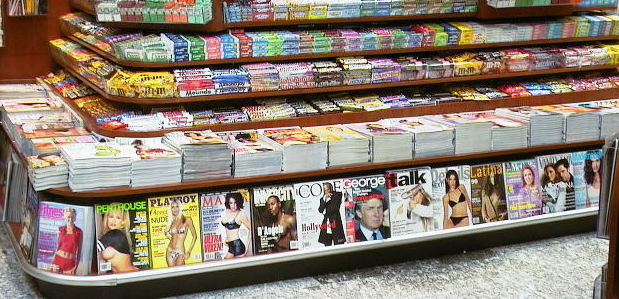
1) Customers are more attracted to stock in the middle of a shelf, then they the tend to look at the right side and lastly on the left side.

So put your best sellers in the middle of the shelf, make your way to the right and then fill up the left with the losers.

2) People aren’t very good at judging changes in size so when you make something bigger, people underestimate how much more it is. This happens because, when we estimate the size of an object, we tend to add instead of multiplying the changes in size.

Read more here.
So make the stock longer or taller rather than rounded.

3) Cooler temperatures indoors leads people to making more emotional decisions.

This could explain why expensive shops always seem to have their air-conditioning turned up.


4) People spend more money in shops with blue interiors over shops with orange.

Read more here.

The article also goes into soft lighting, which can help too.

5) Merchandise behind glass or in hard-to-reach places do not sell as well as stock, which is more accessible. People like to touch.

Read more here.
This, however, will be a real problem if that stock item is frequently stolen.


As I said, I hope this help.


The latest Global Retail Theft Barometer 2014-2015

POS SOFTWARE

Every year the Global Retail Theft Barometer is released, which is the largest and most authoritian report in the world on shop theft. According to the report, the cost was $123.39 billion US for retailers globally, which means the cost increased from 0.94 percent during 2013-2014 to 1.42 percent during 2014-2015. This means it is the biggest crime in the world today.

Australia went down from 1.00% to 0.96%, so you probably did not see the drop. This is in line with what we have always said here if you do not know your shop lifting figure assume about 1% as a starting point.

Although it has to be said with some retailers like a pharmacy the figure is much higher. Their rate of theft is 2.22%, which is up from 2013-2014 by 0.59%. No surprises there if you follow the news - drugs!

Added on top of that is that it is costing the retailer is about 0.79% in loss prevention spend. So assuming a 30% margin 1% x 70% + 0.79% = the cost of shop theft is 1.49% of total sales.

The worst period of the year for shoplifting in Australia was during the summer probably due to the big traffic during Christmas/End-of-year holidays.

The percentage breakdown in Australia by type.


  • Dishonest employees will be about 25%
  • External - shoplifting (39%)
  • Administrative (accounting mistakes, pricing errors and process failures) about 23%
  • Supplier fraud (no delivering what they said) 13%

The last two, in particular, show the importance of a good computer system.

One point I will say about supplier fraud, it may be the smallest but often if it happens its huge, for example, right now, we are working on an investigation where it is calculated that the figure lost in one newsagent is over $191,000+

One of the best tools to determine shop theft is stock takes. 39% of the respondents did one at least every month; 21% did it quarterly and most of the rest yearly. Despite what some people advice, we strongly advise that a retailer should do a stocktake at least once a year.

If you want your own copy of the report which is extremely detailed, please contact them here.

How to cost your shops website?

With Australian shoppers currently spending an estimated $37.8 billion online over the last financial year an increase of 9.7 per cent compared with the year to June 2014 many retailers are now thinking of creating a website to sell their goods. So one frequent question I get by retailers “How much would a website cost?” Unfortunately, there’s no quick answer to this question.

The first point is to figure what you need. For example, if a retailer wants to get rid of a pile of dead stock, a cheap and very efficient method is eBay. Yes, you pay some high fees but eBay has plenty of traffic and a good reputation. Because they have so much stock there already you can very quickly get a feel of what price you can get, you then can crunch the figures, do a few trial runs and see how it goes. Unfortunately if you do start to sell heaps these costs do mount up. That is partly why so many power sellers on eBay do complain so much. Plus it should be said that there are major limitations on what you can do on the eBay site.

So the next step is your own site.

One of the great attractions that people see is that many of the costs in retail like, salaries, warehousing, rent, etc. will disappear. Actually, they do not magically vanish just because you sell online. The figures change, some new costs get introduced but much continues. For example, the rent is cheaper but web-designers time costs and there are ongoing costs as a website needed to be updated partly to reflect the changes online but also to adjust to your changing requirements. Still overall its a great place to do business online as their David can compete with Goliath as David's website can be just as good as Goliaths.

And you get a sales representative that works seven days a week, 24 hours a day, every day of the year selling your products that can help generate extra sales for your business.

There are many possibilities on how to set up a website, the cheapest some say is to use some free software. The problem here is often you need programmers and web designers to set it up. For example, Magento CE, a free online shop software is being actively marketed in our market space. Say you decide to install just 30 of its extensions, which is less than half and each extension takes about 2 to three hours to install. We are looking at 60 to 90 hours of work say 70 hours. Assuming a web designer is somewhere between $80 and $160 an hour, we are looking at $5,500 to $12,000. Then on top of that they need to adjust the system. Also you the user has to be trained how to use it. We are not talking a simple program here. Then there are going to be a lot more fees just to run it plus maintenance fees. The final bill could be double on a complex site.

Another possibility is to use a hosted ecommerce solution. One point I do recommend here, is make sure that the hosted computer is in Australia not just for legal reasons. It's hard to get support if you are dealing with a US company based in India, I know I have been there. The problem here is like most prewritten solutions, which are not written for you, there will be limitations. The odds too is that they will have monthly fees, transaction fees, setup fees, excess storage charges, bandwidth limitations and support fees. You will probably find the costs are much higher than you are quoted.

Lastly for a comparable cost what you can get your own online shop written, which is often what our clients do. Since its made for specifications, you can get the advantage of integration into our software, and you get much more control.

Overall, all solutions are good, and it depends what you require.

Please give us a call to discuss further.

What happens when you do not have real time stock management?

Answer you buy too much or not enough.

With the use of our smart phone app where ever you are, you can check your stock quantities. Here is how it works.

Say you are in a supplier's warehouse or at a trade show, you may have at best a computer generated order report based on yesterday or this mornings figure. You know of course a lot can happen in a few hours in retail. So you may add to the order in your head how you think the stock is going, taking into account any unusual customer behavior, and other vital forecasting tools. Now you come across an item which looks hot, but you are not sure whether you handle it and if you do know you handle just how many you have in the store?

The is a typical example of when really need your real-time data the most.

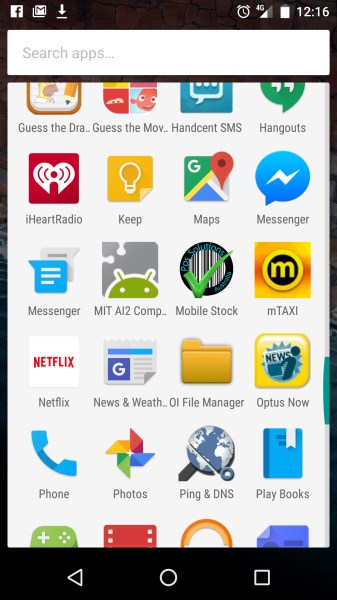
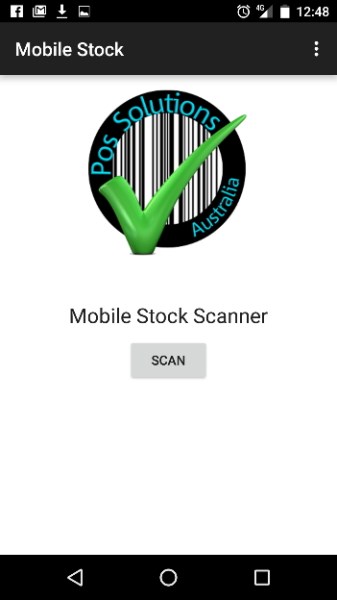
So you go to your smart phone, which has our app Mobile Stock.

Once you select it, out appears this screen.

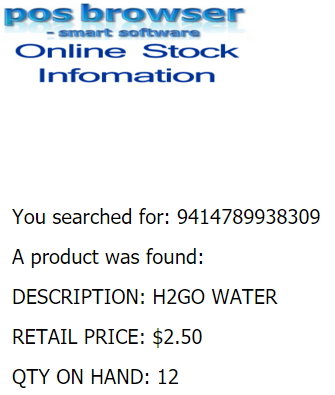
You take a picture of the barcode using the smart phone camera and if the product is in your database, out pops the following.

This tells you straight away a real-time stock figure, and you know you have this product and you have 12 in stock. We include the description so you can check that its not a duplicate barcode unfortunately, they still happen.

People using it tell me that using this app has been invaluable.

The other use is you can discreetly scan the item in a competitor's shop and quickly compare their price to yours to see whether your pricing is correct, which is very handy too.

A quick business guide to Facebook

POS SOFTWARE

I strongly believe that every serious business and organisation today needs a web presence. The web has become the major means of communication between business and their clients.

One place you have to be in is Facebook as every day, 10 million Australians are active on Facebook. Many spend almost two hours a day on it.

And it is free.

If you are not there, I recommend you go to Facebook, see what a few similar businesses to yours are doing on Facebook now. Check the ones you like and take a few notes about what your business needs. Note the words you need to say.

Then take a good camera, someone associated with your shop must have such a camera or failing that use a top smartphone. Now give the shop a clean, tell everyone to get nicely dressed tomorrow and take heaps of digital photos of shop, you in the shop, the staff, the shop, the products and services. You will not be sorry if you take too many, only if you do not have enough. Now go through them and select the ten best.

Now find the pages of your suppliers, similar businesses, your own and some other pages that would interest your clients, check out what they do, the details required and note these down. Change it to what you need for your business.

With so many Australians already on Facebook, the odds are that someone associated with your business knows how to set up a Facebook page.

If you are stuck and are a client of ours, we offer a free service to help you.

Now go to Facebook and set up a page. In my experience, it takes people about an hour to set up. If you do not know what you are doing it’s a pretty full-on hour. If you make a big blunder, do not be worried as you can correct later.

Once this is done now push your page on your clients. Ask them to like your page. Put a sign up the front of the shop, “Like us on Facebook." Put a similar message on all your receipts and statements. Push the page to all your VIP members, your staff, etc.

Now every few days check out the pages you noted above. Share or cut and paste an interesting comment from one of these. Please if you do a cut and paste make sure you change it so it becomes an original piece. Furthermore, add every now and then something interesting from your store, for example, a new service you are offering, an award you won, a new stand, new items, etc. Doing this will probably take you about half an hour a week and while you are doing that you will, in addition, keep you abreast of current affairs in your marketplace.

As an added bonus, our clients can integrate this Facebook page in our point-of-sale system.

Now if you want something more like an integrated website available through our point-of-sale system, stay tuned as I will discuss how you can do this in my next article.


 

Business - Interchange fees

Tomorrow the Reserve Bank will rule what will happen about interchange fees.

Interchange fees are fees charged to the merchant for EFTpos by the payment network.

The trouble with these fees are two fold. The first one is by world standards these fees are fairly high. As the Australian economy is not that large in world terms and is relatively detached so there is no competition for EFTpos so meaning that its a monopoly and these fees must be paid as few retailers can realistically refuse to accept Eftpos in Australia. The second problem is that Australia it is dominated by a few huge retailers who do not pay these interchange fees, so giving them a significant marketing advantage over every other merchant.

There are three options the Reserve Bank can take.

1) They may decide to cap these fees which is what the European Union did for most cards.
2) Abolish them
3) Do nothing.

My preference would be (2) abolish them and make the banks charge the consumers directly. If you think about it, the consumer is paying these fees now, its just hidden. By doing it direct this would make it a level field for all business and organisations. It would also make these fees open and also competitive as the consumer would be able to shop between the banks for the best rates.

Whatever the Reserve Bank decision is, it will have a direct bearing on surcharges. If the Reserve Bank decides to abolish the interchange fees, there will be significant pressure to force retailers to get rid of surcharges that the consumers do not like.

The other issue is that is not going to be addressed tomorrow are many merchants are supplied under long-term contracts and discover soon they have with their EFTpos and credit facilities extra fees and conditions that were not expecting. Then they discover over time that their equipment is old technology. This is particularly a worry true as smartphones are now replacing credit cards, and many of the existing machines cannot handle smartphones credit card handling.

My advise to any retailer is not to sign any long-term contracts. It can be done. Our EFTpos and credit rates, I think are on a good rate, and we are not under contract.

Business software - What if you do not have microsoft office?

For years, Microsoft Office has been the champ of office suites, and it still is. I like it very much. However, that doesn't mean there are not free alternative. It's just that Microsoft Office is so much better and practical and was integrated into many point-of-sale systems so many people paid the $300 to get it.

Well unlike many other point-of-sale systems, our users have a choice, to decide whether they use Microsoft Office or the free Openoffice.

The choice depends purely on what you prefer. If you are a big user of word processing and excel spreadsheets, used to the Microsoft product and require much, then I would recommend Microsoft Office, mainly as I think it is better. If alternately you only write a few letters, a year and need only simple to moderate complex spreadsheets, then openoffice in most retail environments is fine.

Both are extremely good and solid products with all the basic office suite functions required. Both will do everything that most people require.

Both are getting better all the time so you can grow with them.

My recommendation would be if you do not have an office suite and feel the need to be able to do some word processing and spreadsheets try openoffice as its free. Use it with our software. Learn how to use an office suite. Subsequently if you decide you do need something better or its not working for you then switch to Microsoft Office.

Remember with us, you have a choice.

Retail sales in the magazine trials

As the readers here know we have been actively monitoring the sales of magazines for those of our clients who are on the ACCC magazine trials.

So far, its the same result that I reported earlier was that from our measurements, I can see NO increase in magazine sales because of the trials. If the magazine companies went into the trialsto show that they were some super marketers that could increase magazine sales, well I do not see it, and I am certain I would if it was significant.

However, a distressing trend is beginning to appear that the number of unsellable magazines seems to be increasing. What we think is happening is that those on the trial had their titles reviewed and many that were considered to being unsellable were cut. What this did is create a reduction in the amount of magazines being sent. This reduction seems to be slowly filled with other magazines that do not sell either. One shop reported to me that they sold two of a magazine a month, they have started to get 20. When they complained, they were told it was, so they could create a waterfall. Well, no one is going to create a magazine waterfall if the sales are 2 a month. That shelf space is going to be used for something that sells better.

I will report back further shortly. If you want to know more before that let me know..

Newsagent - The lastest ABC circulation figures now released

POS SOFTWARE

It is down, the good news, if you can call it that is that the decline in print has slowed somewhat.

Looking of the figures, I just cannot figure out some of them the Saturday Age, for example, they are claiming 96,768 printed copies, 64,266 digital copies, which if you add them up equals 161,034 copies. However, the circulation is listed as 168,411 copies. That is a discrepancy of over 7,000 copies. The same problem, I had with the Sunday Herald Sun and the Sunday Age which are also about 7,000 copies short.

Still looking at what we have the figure for circulation, it is down about 7%. South Australia, Western Australia and the national titles are a bit better than the average, but they are all down which is what newsagents are reporting too.

Interestingly despite all the talk of digital replacing printed copies, print still makes up 78% of all circulation Digital only is 16%. Most of the digital circulation today is someone gets a printed copy, and the newspapers throw in a digital copy in the deal which cost them nothing and that digital copy probably goes to a son or daughter who lives elsewhere. So from what I can see it been 10 or 20 years since the Australian newspaper companies decided to focus on digital but its not really working for them as they are stuck on print.

Anyway, you can get the figures here, read some discussion most of which I do not agree with and make your own mind up.

Also if you want a copy of the spreadsheet that I used to analysis the figures, click here


inventory management - How to secure your display merchandise

A frequent means used to secure costly stock to put out a damaged demonstration stock, or a sampler or a replica on the counter with the box but keep the actual stock for sale in a secured location.

Typical stock would be items like mobile phones, jewellery, expensive pen, etc. Only if the customer is keen, do you bring out the actual item when it can be demonstrated with a trusted staff member in supervision. As such the odds of stock getting shoplifted is considerably lowered

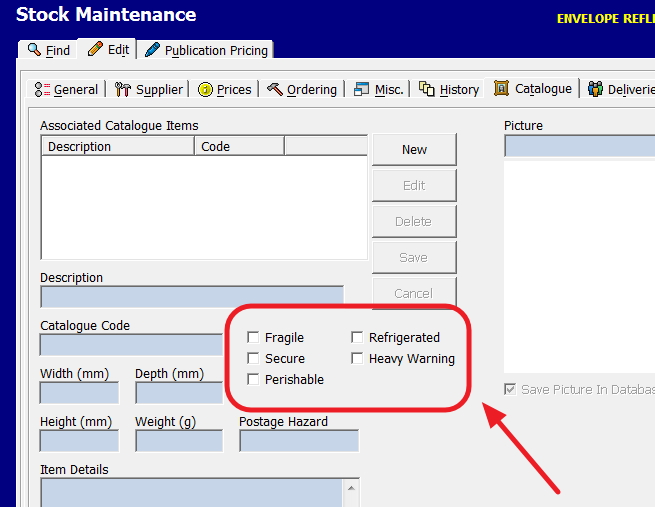
This is how you mark that an item is to be treated like this.

Go to stock maintenance and then catalogue, you will see there are a list of these very specialised item categories.

Tick secure.

There are plenty of other options there and I do suggest that you run them too as they maybe useful as well.

POS Software - Cross selling

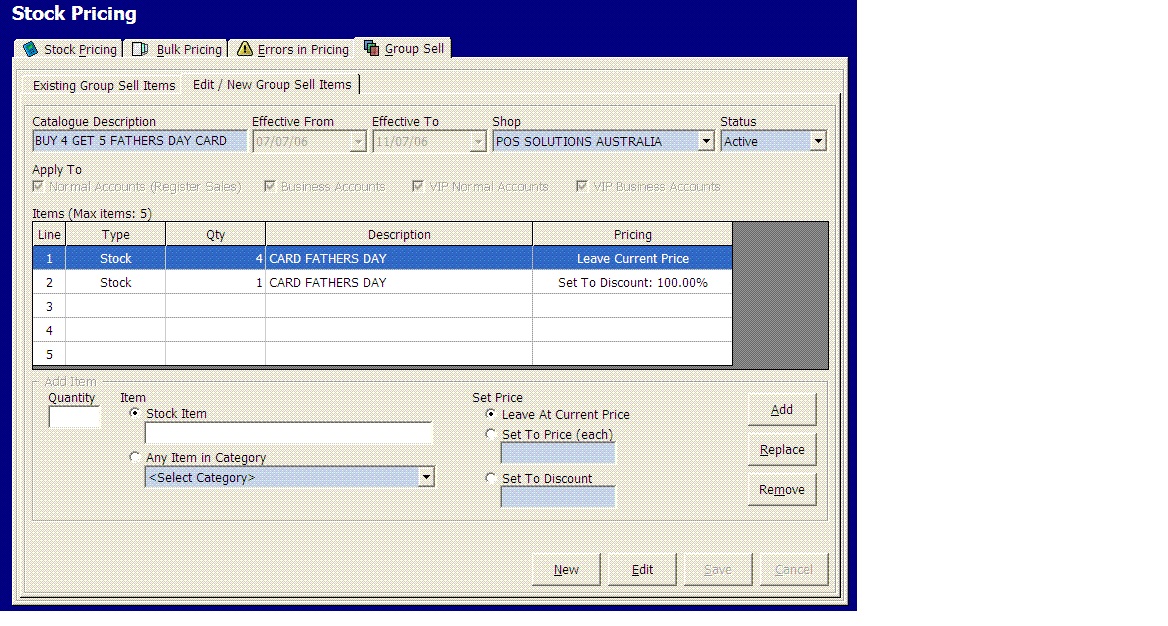
Whenever a product is doing poorly many retailers because it is taking up valued space that can be used for better products sell it off cheaply with a major deduction However, rather than discount it completely to get rid of it, why not consider creating a cross sell by packaging it with another product to make a group? What you do is get something that sells well, make a group and sell it off a smaller discount.

POS software - How to quickly check your barcode scanning percentage.

What everyone states that utilizes our software is how few key strokes a person requires to use our system. It's made for speed.

One big way to improve speed is to scan rather than punch department and product key strokes.

So what we suggest you check your scan rates to see which departments you are having trouble with scanning. This is really very simple and quick to do.

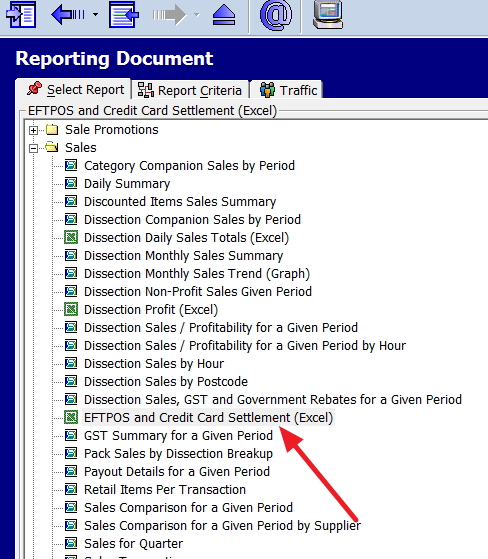
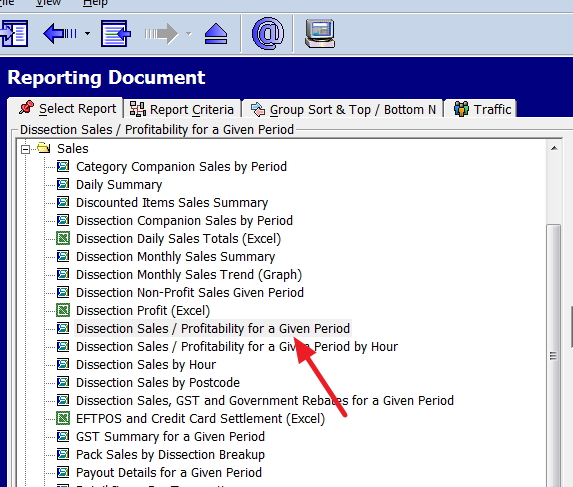
Go in cash register reports

Select in sales

Dissection Sales /Profitability for a given period

Now place here say the past three months and run the report.

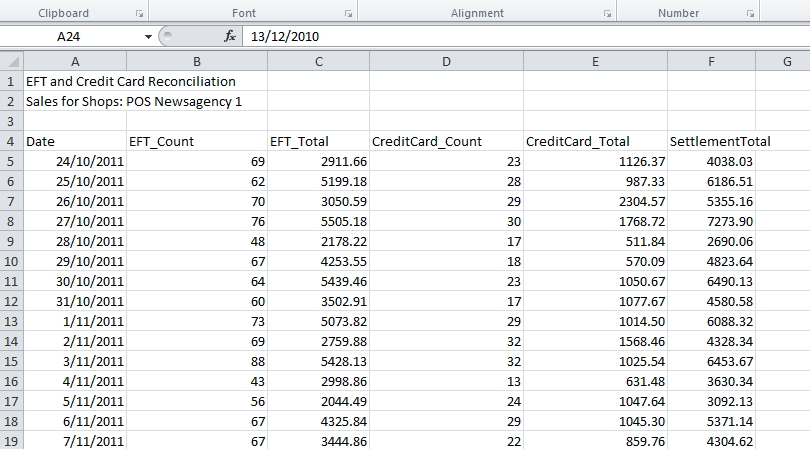
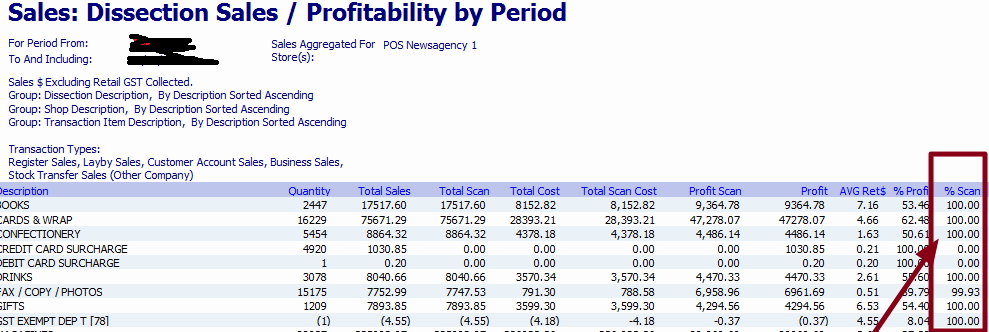
Out will pop a scanning analysis.

Note the column highlighted, which you can now investigate.

PS A useful concept is to check on the following three months by using the comparable dates from a year ago. That will give you an idea of what you can expect within the next three months.

Sell fast, barcode .

POS software - Late payment charges

If you want to know which customers are set to get a late-payment fee? Check to make sure that the right people are being charged.

If so, please try this report.

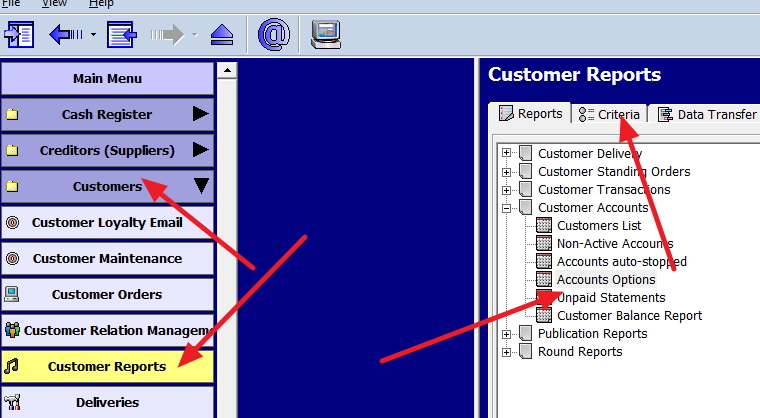
1. From the Main Menu, go to Customers and then Customer Reports.
2. Double-click on the Customer Accounts options to expand the report.
3. Click on the Accounts Options report and then click the Go to Criteria Report.
4. Select any options on this screen and then click the Show report.
5. The customers set to receive a late-payment fee will have. Yes in the LateFee column.

There is also a lot more information there too.

point of sale software - Another tip

In your loyalty system, you collect emails and SMS details. Here is a tip how to use it.

Check the life cycle of the items purchased by your clients. You should get a fairly good idea of the average lifetime. If in doubt, you can always ask your clients during the sale process "How long do you reckon that will keep you going?" Now set the VIP system so it automatically send an email to your client prompting them that now the item they purchased needs replacement and you have it.

A related idea that works well is if the items they purchased has been upgraded or a newer addon coming out, send emails to these shoppers to remind them that they did purchase the item and a new model and/or addon is available now in your store.

You are going to find that many of your clients, if they do not buy from you in a certain time period can be lost forever, deliver them a individualised e-mail before that time period may induce a purchase.

This idea works with a wide diversity of products in almost any business.

Reduce POS system cost

Here is another tip to save you money while running your point-of-sale system.

As ink accounts for about 60% of the cost of printing, what you can do is by adjusting the font you can actually save a significant amount.

For example, if you look through this list of fonts. you can see that there would be significant difference in the amount of ink being consumed.

For statements, I would advocate you look at Century Gothic and Times New Roman fonts, which are among the most cost effective fonts. Although slightly dearer Calibri, is almost as good but has the advantage that many feel it looks better and is more professional. Microsoft for example uses Calibri because they feel that "The more pleasing a font looks at the screen, the less tempted someone will be to print it. This will save both ink and paper."

Additionally, test your printer on 'draft' and 'fast normal' that will save even more ink.

Melbourne Cup

Our office will be open for the Melbourne Cup day tomorrow for your support calls.

Good luck and happy punting.

PS We wish all of our amazing clients a very happy Melbourne Cup day.