Point of Sale Software

From my family to yours, we wish you a wonderful holiday season!!

Readers from my family to yours, I would like to take this moment to wish each of you a wonderful holiday season, and I hope that next year 2017 brings you health and happiness.

Our office will be working as usual though the holiday season and I of course will be available throughout.

Have a good one!!

Your Retail Protective Key Performance Indicators

POS SOFTWARE

It's a good idea every month to check your Retail Protective Key Performance Indicators, to see what people at the point of sale are using. What these indicators do is gives you among other points a detailed breakdown for each operator on how many and how much no sale, voids, count, totals, refunds, negative items and discounts they are doing. Pay particular attention to unusual large numbers of voids.

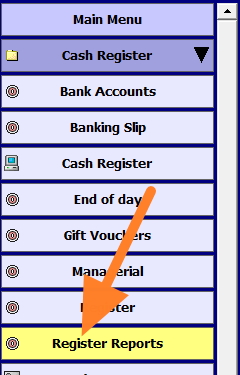
To call it up, go to cash register reports. (see orange arrow)

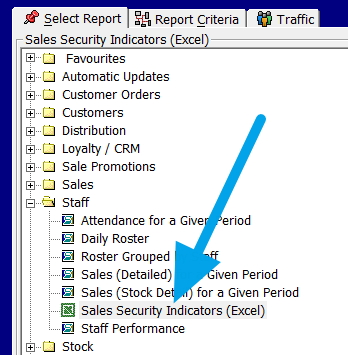
Then select Staff and click on "Sales security indicators" (see blue arrow)


Select required period, you wish; I recommend doing it monthly.

As the report comes out with lots of indicators.

What you are looking for is that most thieves, have a method which works for them, and so they tend to use it almost all the time, as such one indicator is generally up. So what you are looking for is someone who has one item that is very high so what I do is, in the report ask it to divide the Item_Void_Total and the Refund_Total by the total number of transactions the person has done and compare those figures to the average that everyone's else has done. Anything significantly up on that average figure might mean something, Also another point to look for is that generally with an operator no-sales and voids tend to be linked, a high no-sales result tends to go with high voids and vice versa, but if one is high and the other is low it's worth investigating. This is actually shown nicely on the graph you can make from the report.


End of independent magazine circulation audit system (ABC)???

It looks like we are seeing the end of our quarterly independant magazine circulation audit (ABC). I suspect because it has been reporting news like this for 10 years?

It's a shame as for years; their figures have been the standard that industry has used because it was seen as independent and validated. Although I did hear complaints about it, most people in the industry sellers of magazines, advertisers and data miners like me used it. A few days ago Bauer Media, which is the largest magazine publisher in Australia, pulled out, now News Corp pulled out on Monday, which means they have only Pacific is left to audit.

That leaves us with just readership figures from Roy Morgan Research as the only independent measure, and I doubt that many people care about that figure, there is a big difference between a buyer and a reader?

If you want to read more, please click here.

Update: 22/12/2016

Pacific Magazines has now withdrawn from the Audited Media Association of Australia too, so now there are no independent and validated magazine circulation audits, I wonder what the advertisers will think about that? Click here for details.

Nextra stores

POS SOFTWARE

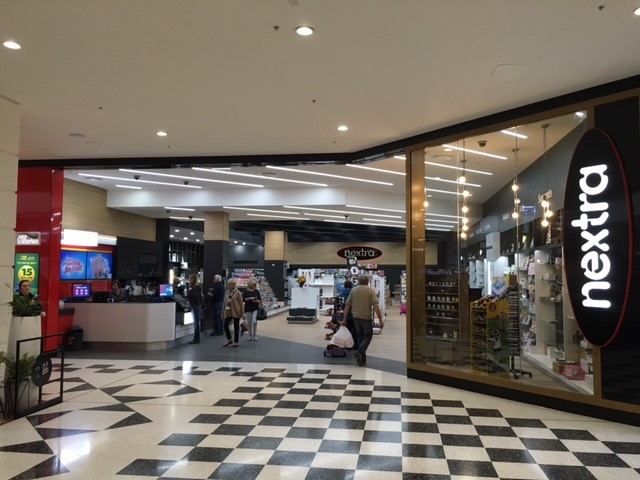
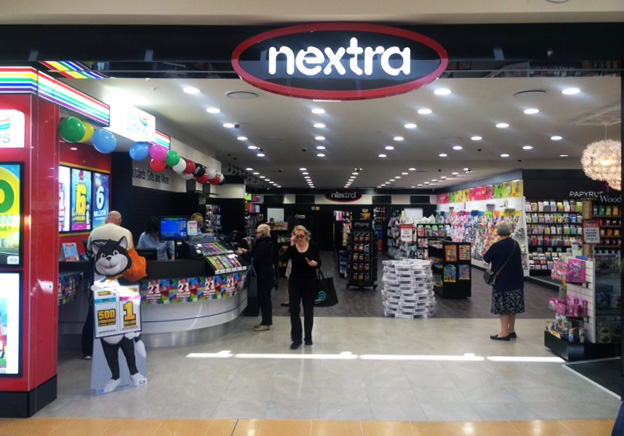
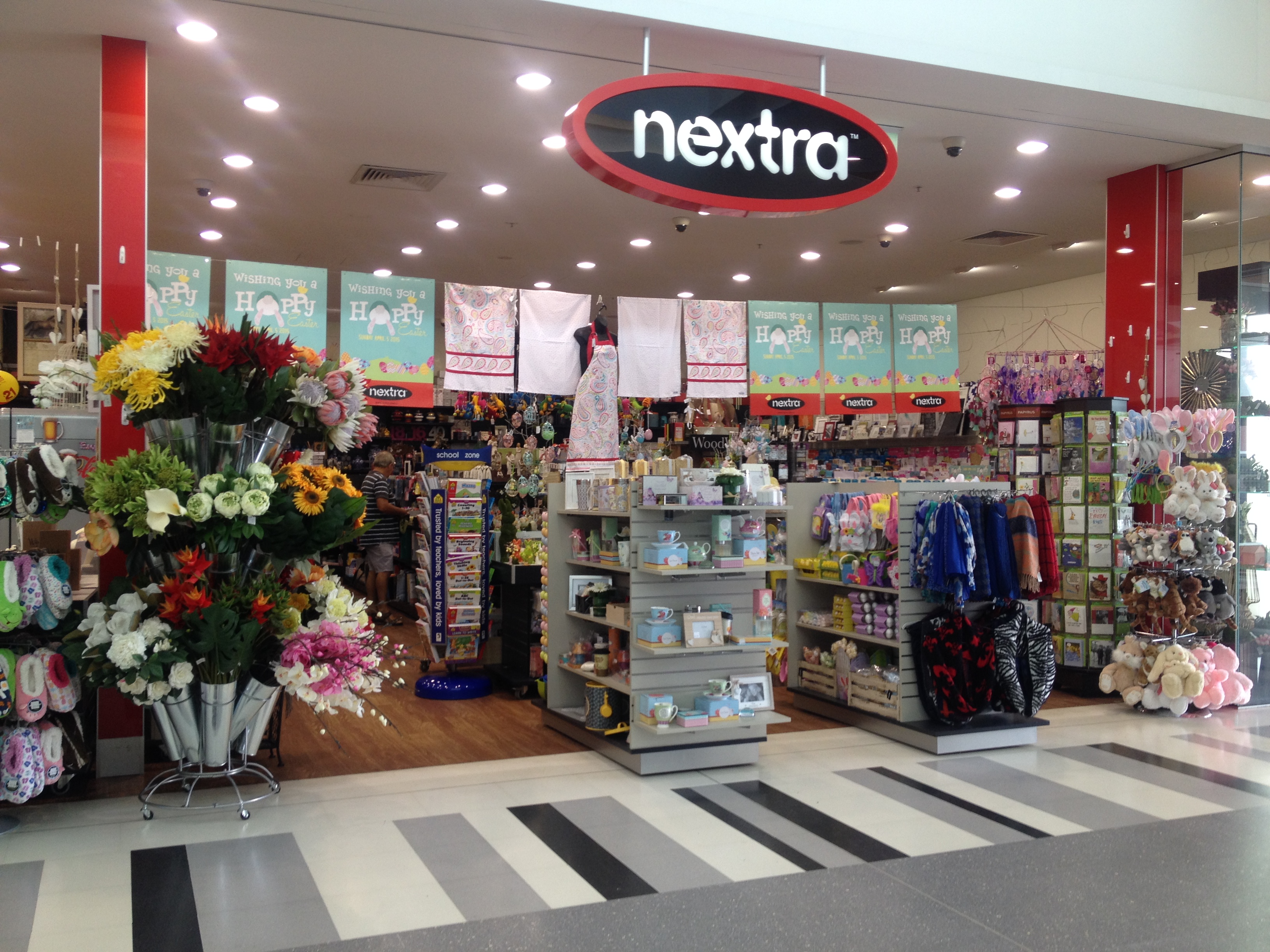
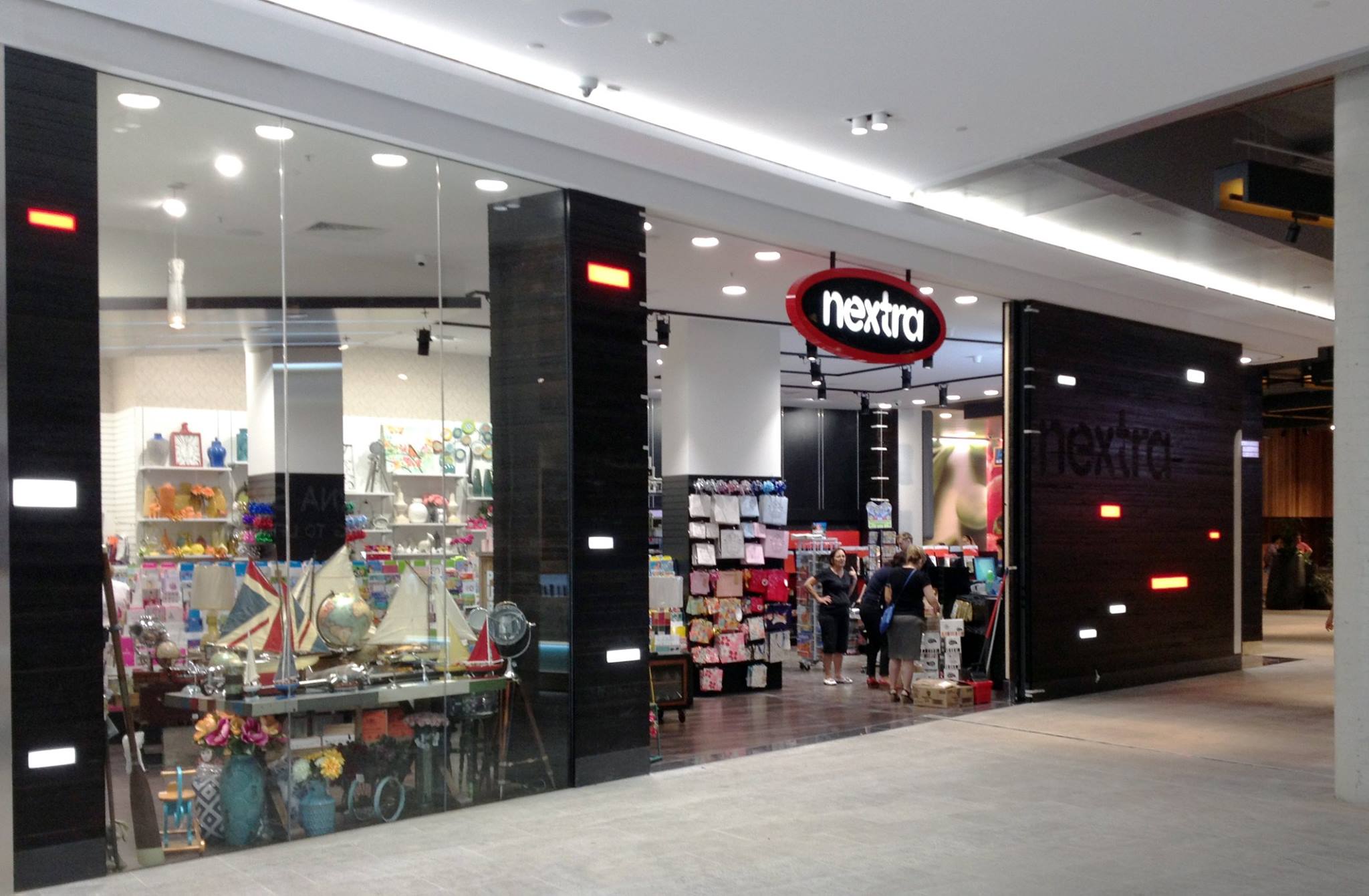
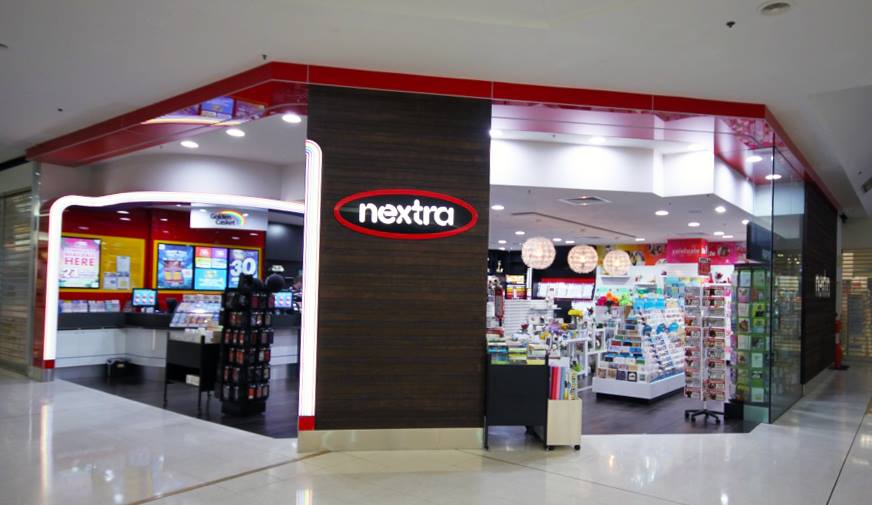
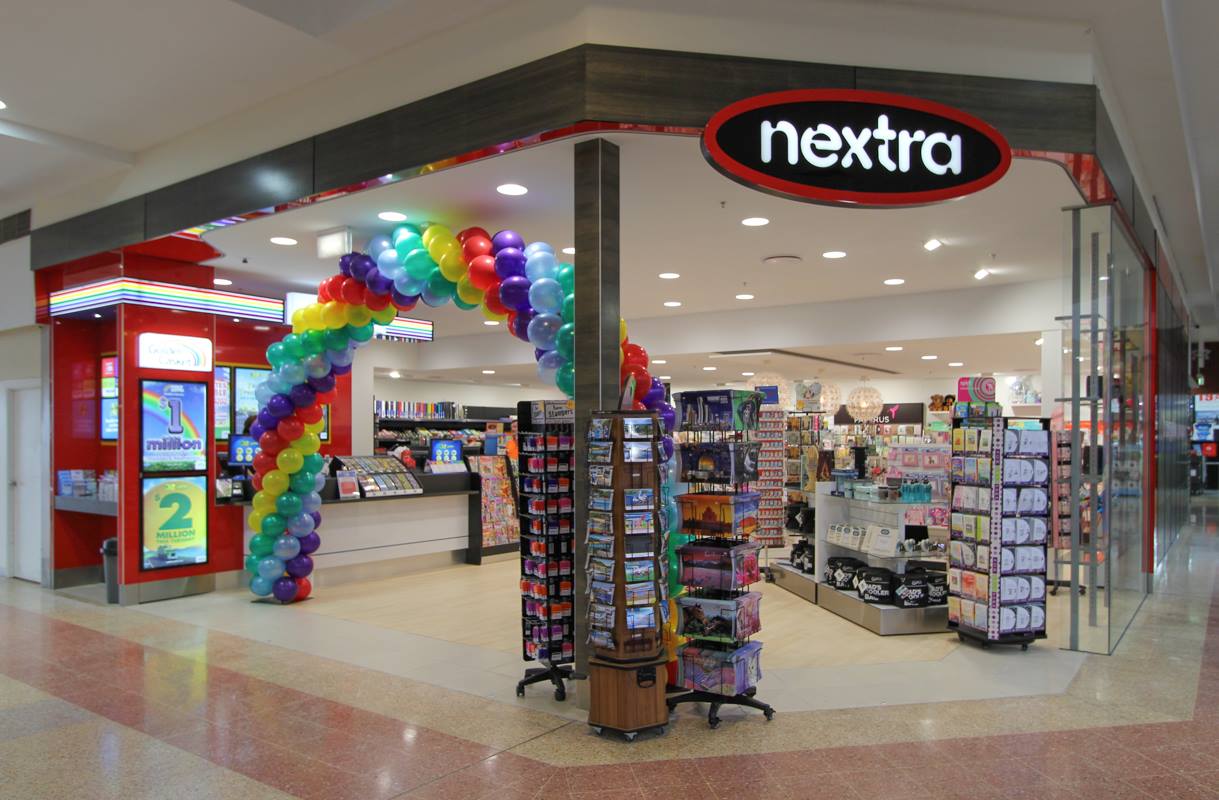
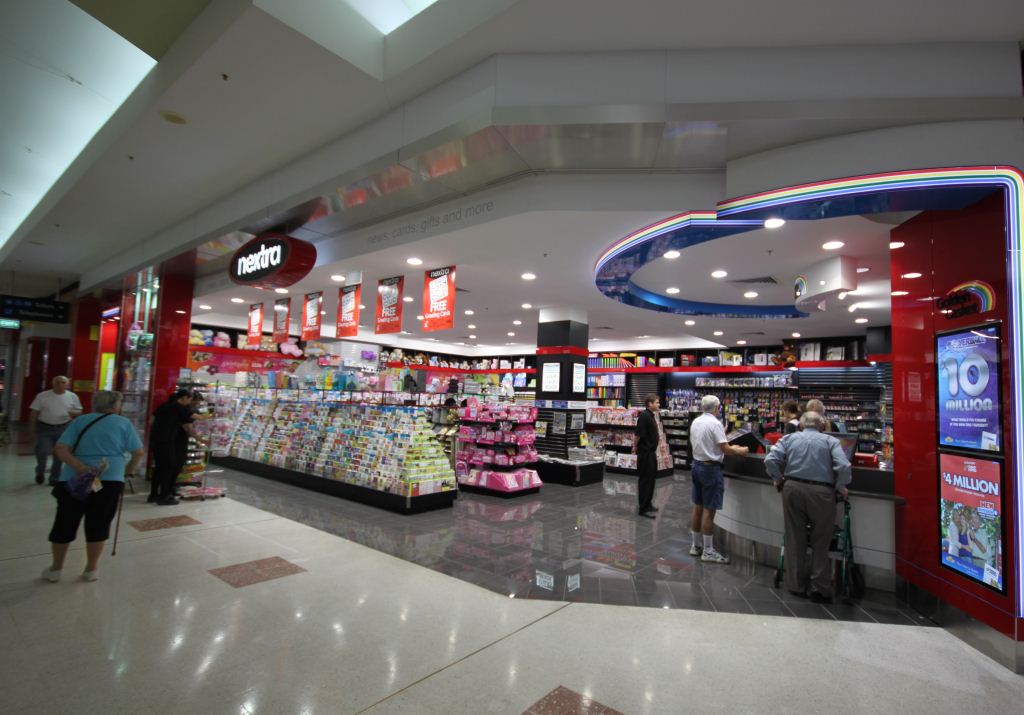
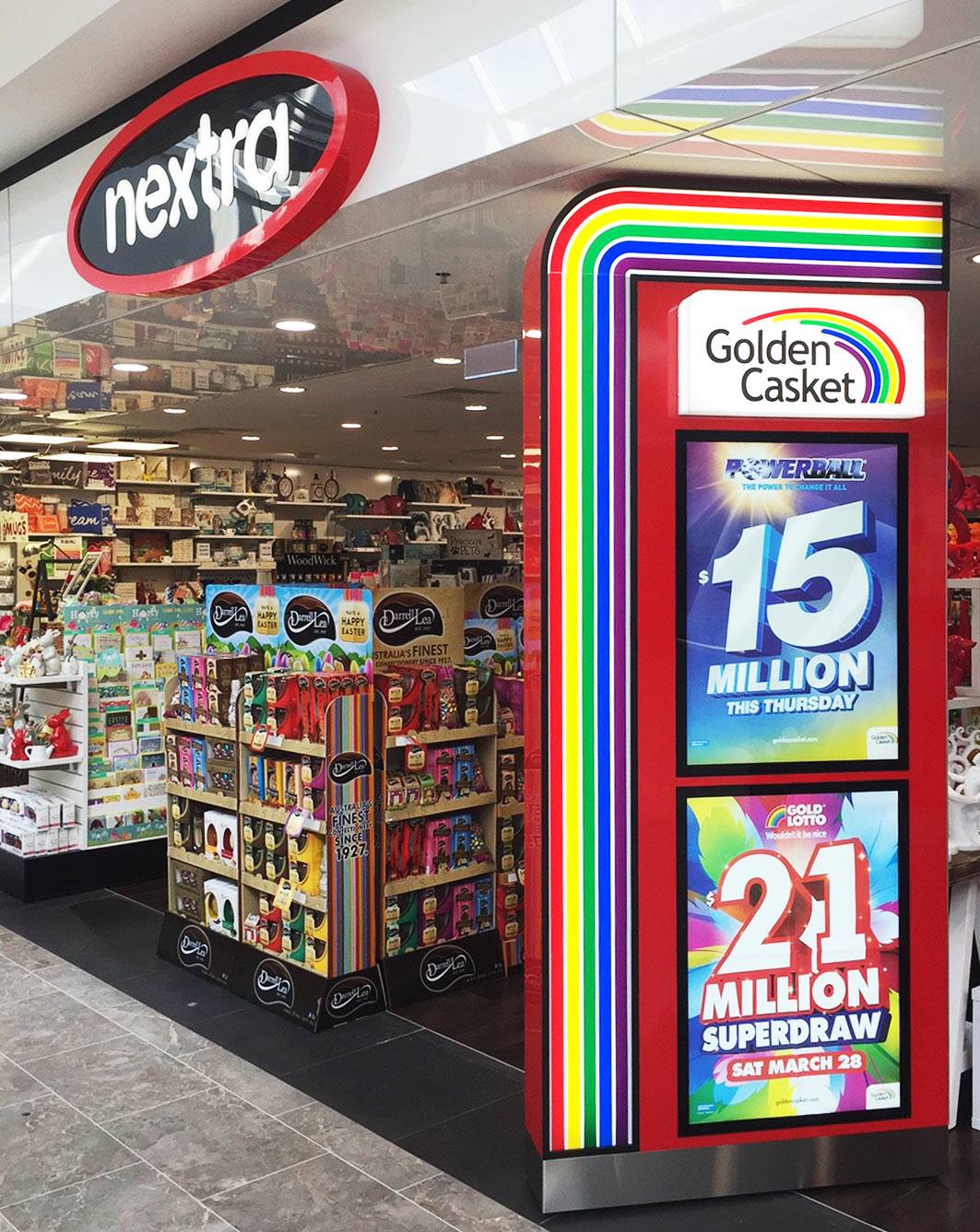
Here are some photos of some publicity shots of our clients all who have our point of sale software in the Nextra chain. Very nice-looking shops.


Nextra store 2


Nextra store No 6


Nextra store No 3


Nextra store No 10


Nextra store No 8


Nextra store No 1


Nextra store No 5


Nextra store No 7


Nextra store No 9

How to handle dynamic surcharging

POS SOFTWARE

Surcharging is an extra charge levied on a customer at the point of sale for the cost of processing electronic payments. Dynamic is when it changes by pay type. Fortunately for our clients, we have a simple and safe solution for those wanting to introduce this fee, which is automatic with no investment or cost to set up it up, which can save their business money.

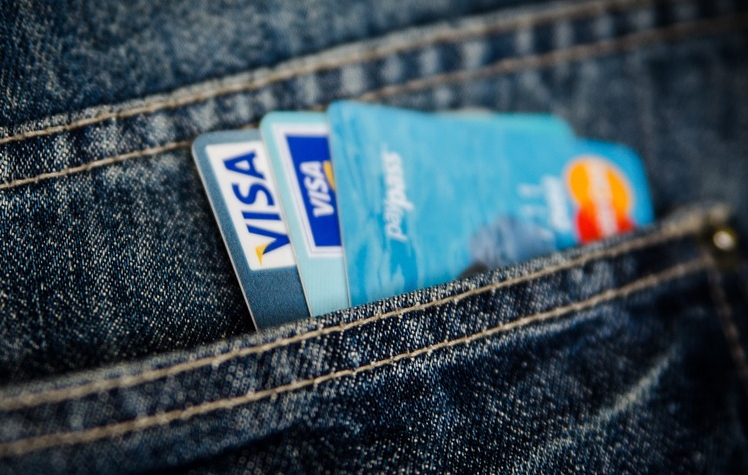
The amounts involved are NOT trivial. The Reserve Bank Of Australia (RBA) here which presumably the ACCC will use for a guide, stated that Visa or MasterCard debit transactions may cost a business around 0.5 per cent of the transaction value. Credit cards usually have a higher cost for businesses, and may cost the business up to 1-1.5 per cent for Visa and MasterCard. How they got those figures is beyond me, my figures based on some of my clients figures just on direct bank charges would be that for Visa and MasterCard debit and credit transactions about 1.65% which I think you should be using as a guide for your costs for an initial calculation.

Some points for NOT using surcharging

Almost all consumers dislike surcharges; one study showed "more than 90% of consumers want surcharges eliminated; one in four don’t return to a business if surcharged, and three in four tell others to avoid a business because it surcharges."

Cash is not free; it has to be in a collation, then counted, balanced, stored in a safe, then a trip to bank and then banking fees. Plus there are losses due to mischange, the increased the overall security risk of the premises, etc. The cost of cash handling and its associated costs in a business are commonly put down at about 2% to 2.5%, which is actually higher than the fees of the electronic payments. If so why discourage people from using cards with fees?

Some points for using surcharging

Surcharges allows retailers to offer cheaper prices as they are not subsidising those consumers who use more expensive payment methods.

Most people have a backup form of payment method, and if you offer them a choice, they can select the payment method that best suits them.

Some items the margin is so wafer-thin that they cannot be sold with some payment methods without surcharges.

Finally and for many, this is the biggest problem it allows retailers to offer more payment types, for example, American Express (AMEX), paypal and Diners, which a number of businesses do not accept due to higher costs. A lot of corporate cards are AMEX. Many people work in such organisations, and if they are doing company-related work, they need to go to a place that accepts AMEX. If corporate customers are important for your business, then you must accept AMEX.

I am sure you can add more to the list for and against.

Now assuming that you do want to introduce surcharging at least for some payment methods. We have two alternatives, Tyro is a good option here and we do recommend that you use it. It is automatic and easy to set up; the main problem is that it cannot handle most of the payment types, although it can handle the most popular.

However, our point-of-sale system can handle it all. This is how.

Go into the main menu, select Dissection Maintenance.
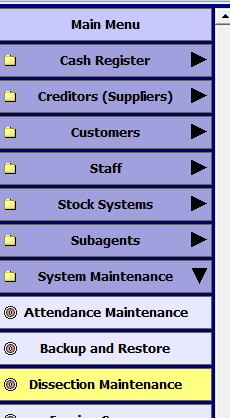


Now in Dissection maintence, where the yellow arrow is click the tab "Pay Types"
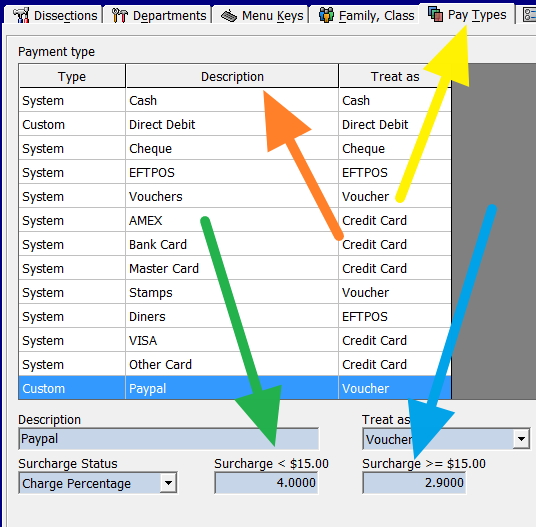


Where the orange arrow is you can read the existing pay types this business offers, note it does accept some of the expensive payment types like AMEX and paypal.

When clicked on paypal, look where the green arrow is pointing for what appeared.

In view of Australian standards, we do recommend that In Surcharge Status, you use "Charge Percentage" as shown here because that is what the goverment prefers although other formulas do exist here.

The $15 point, which is the generally accepted cutoff figure for micropayments soon unfortunately for most payment types you will not be able to use as the standards state it should be the same or lower then costs for all amounts. Although in this example, Paypal is not covered under the new goverment standards. As paypal rate is 30 US cents plus 2.9%, so what they did here is make it a bit higher under $15, 4% (see green arrow) and over $15 use the 2.9% (see blue arrow).

You will find extra details on this page too which I will discuss later.

Using this you can offer more flexibiltiy to your clients in their selection of payment types.

If you have any questions, or want to know more please let me know.

 

Scripting a great time saver

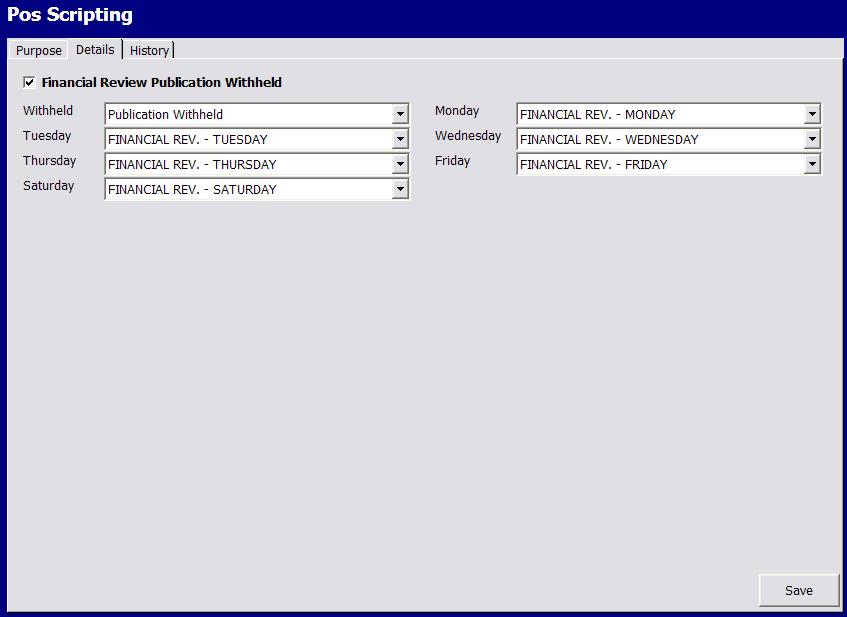
Scripting is an advanced feature in our point of sale software. It does changes like newspaper price changes, bumper editions modifications as well as order changes automatically rather than the user having to waste their time entering information on the correct day for a task.

Here would be an example of the financial review being stopped over the season.

The following changes are coming down now.

[2016-12-24]: The Christmas 2016 edition of the Age will not be published on Sunday 25th of December[2016-12-24]: The Christmas 2016 edition of the AgeSub will not be published on Sunday 25th of December[2016-12-21]: The Christmas 2016 edition of the Financial Review will be on sale from Thursday 22nd of December to Tuesday 27th of December inclusive[2016-12-27]: The New Year 2017 edition of the Financial Review will be on sale from Wednesday 28th of December to Monday 2nd of January inclusive[2016-12-24]: The Christmas 2016 edition of the Sydney Morning Herald will not be published on Sunday 25th of December[2016-12-24]: The Christmas 2016 edition of the Herald-Sun will not be published on Sunday 25th of December[2016-12-24]: The Christmas 2016 edition of the Daily Telegraph will not be published on Sunday 25th of December[2016-12-24]: The Christmas 2016 edition of the Sunday Mail will not be published on Sunday 25th of December

I am sure you can see the massive time saving and improvement in accuracy.

dynamic surcharging for eftpos

Fortunately, the government does recognise that retailers do incur costs when they accept payments from customers with electronic payments, and these costs vary depending on what payment methods are used. In response to criticism of abuse by the public which I think is quite justified mainly by large companies, for example, I got charged by an airline company a $15 VISA charge on a ticket that was about $89 the government has created a new standard on surcharging that all retailers will need to comply with from the 1 September 2017. Since it is already mandatory on large business, it's worth reviewing your situation currently as this is the standard that your clients are using now.

The first point to say is that I am not an expert in this subject, I can read, ask questions which I have and give you my views, but I suggest that you do discuss this matter with an expert.

These changes affect EFTpos, Debit MasterCard, MasterCard Credit, Visa Debit and Visa Credit and the American Express only if the card is issued by an Australian bank. They do not affect most American Express, UnionPay, JCB, Diners Club and paypal.

Currently most of our clients that do charge a surcharge tend to have one fixed fee and if so you need to review this as the government does not want you any more charging a fixed fee for processing an electronic payment, although they will accept it in *some* circumstances.

What you need to do is review each electronic payment method to determine the cost percentage. What you do is look at your direct costs are for each payment method and say you determine that.

Eftpos $100,000, cost levied by the bank in the last 12 months on the EFTpos was $500, your extra fees were $200, then the percentage is ($500 + $200)/($100,000) = 0.7%

MasterCard credit was $150,000, cost levied by the bank in the last 12 months on this was $1500, your extra fees were $300, then the percentage is ($1500 + $300)/($150,000) = 1.2%

VISA credit was $200,000 turnover, costs levied by the bank in the last 12 months was $2000, your extra fees were $330, then the percentage is ($2000 + $330)/($200,000) = 1.2%

etc.

These extra charges have to be direct charges on the payment method, so you could claim for example merchant service fees, terminal fees, and any other fees incurred in processing card transactions but not the phone line for the terminal. If you pay extra insurance to cover VISA fraud, then you can claim that too.

Now what you can do here is a fee for any EFTPOS transaction with a surcharge of 0.7% and a MasterCard with a fee of 1.2%, etc.

You must do it like this because if say you want to surcharge as EFTPOS, Mastercharge and VISA with same rate you will be required to set the surcharge at the lowest cost of these products which is 0.7% which is not enough for MasterCard or VISA. So you can see that there is a fair bit of work to do, so I was pleased that some electronic payment suppliers like Tyro have done much of the work for you and calculated for you a recommend surcharging rates. I do suggest though you review these rates first before accepting them because you may have additional charges, for example, our clients get a bank payment gateway free in our point of sale software, but some software suppliers charge a lot extra for such a gateway. This extra charge may be claimable too.

If you wish to add a booking or service fee, you can, but it needs to be entered separately to the surcharge.

Also it should be stated that is most people do not like the surcharge, they often do spark a backlash, you need to remember that there is a person who needs to agree to pay it, and if they have concerns over whether a payment surcharge is excessive, they can now contact the ACCC which has the power to investigation and has enforcement powers over cases of excessive surcharging.

The last point is that our system with no changes now can handle dynamic surcharging.

For more information click here..

A recent update from Microsoft for Windows has messed up some POS Software

As we get closer to the end of year season, retailers are now working harder than they have all year as now the sales are coming.

So what happened today, without warning many retailers discovered that their system went down while trying to finish a cash register transaction with a black window appearing where the POS screen used to display. It soon became clear that the cause was that their software supplier had ignored the Microsoft's customers annoucements, so they did nothing and this was the result. At first we all thought it was only older Windows 7 users that went down but now it appears that all Windows software versions were affected. Since the POS software is old and does not have automatic updates, it probably will be months before all these stores can be manually fixed until then these shops will have to get used to this plus it will cost them money because as sure as day follows night, their staff will muck up the change as a result.

This is not the first time it happened, an update to anti virus software, caused many of their sites to go down too. Unlike us, who can immediately correct such errors by releasing an automatic update, if their users go down, it stays down until it can be manually fixed.

Another example was a recent update from Microsoft for Windows 7, 8 and 10 mucked up the internet connectivity on 10 Dec 2016 so many could not get online.

Consider this an example of the problems running old out of date software.

A simple question is to ask yourself is how would happen if your point of sale system failed now, can automatic updates be sent? Now ask yourself what would happen if your POS system suddenly fails two weeks from now?

PS Microsoft have a habit of releasing problem patch after problem patch till they finally get it right. Generally I notice it takes them about day or 2, to produce the next patch so it can take awhile. Note the page I quoted from Microsoft's page above has a revision number of 62.

If you look at the update log of the automatic updates of our software, you will find references to fixes to Microsoft, Adobe, antivirus software, etc, etc, etc. What happens is as soon as its reported, we release an emergency patch and the rest of our users are not affected, in fact they do not know it even happened.

This is as it should be. This is as you want it to be and what we do.

POSTAGE HAZARD

Today you often need to be aware of items that are considered to being a postage hazard if you sell them in your retail shop. With all the items in the shop, it can be easy to forget that one is considered to being a postage hazard some items are not allowed to be posted for delivery such as highly flammable material. Sometime they can be delivered if they meet certain conditions and are packed in a specific way. It can be easy to muck it up, for example, one of my clients has recently discovered that they have a problem with the lithium batteries they stock.

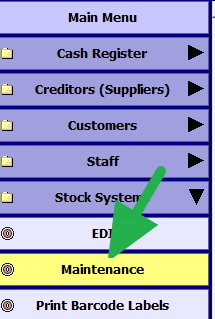
To enter in Postage Hazard, in our point of sale software go to the stock system on the main menu.

Then click on maintenance marked with a green arrow.

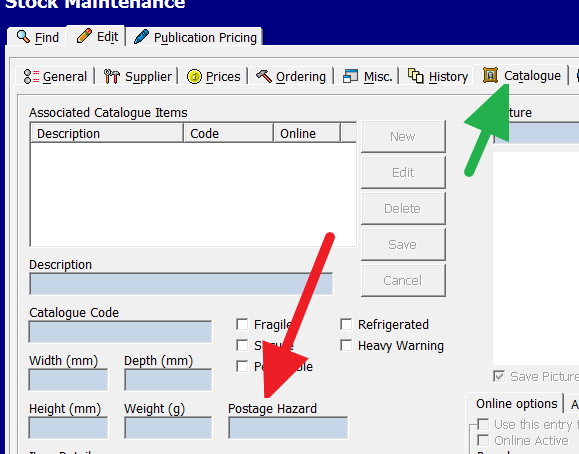
Now in maintenance click Catalogue marked with a green arrow. Then click on the Postage Hazard box marked with red.

Note it does not just deal with the postage, the same problem can occur if you send someone to drop it off at a client.

Consider allowing Double discounts

POS SOFTWARE


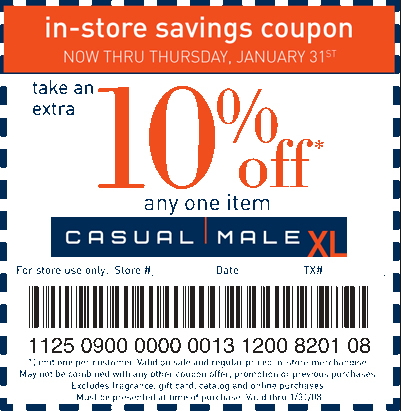
Sometimes what happens is that a person gets a voucher like this and comes into a shop which has items discounted. Now if you allow the person to claim this voucher off the already discounted items, what you have is a double discount.

As expected studies have shown that these double discounts confuse people but what they also have been shown is that as a marketing tool double discounts are very effective. You can read about a study here.


Our point of sale in the major compounding pharmacist in NSW

POS SOFTWARE

A compounding pharmacy prepares individualised prescription medications for patients and animals when mass produced manufactured drugs are unavailable or not appropriate. Some reasons would be.

- The medication is not commercially available
- Special dosages are required
- Some people and animals have special allergic reactions
- Special formulations are required

As you can appreciate, any facility that does such work requires an extremely high standard both in the distribution of products, stock control because of the legal requirements in drugs, a large number of patients and the complex chain of order, it requires an extremely sophisticated point of sale system that is way above the ordinary.


So we were thrilled that the major one in NSW, Bova Compounding selected us as an IT supplier servicing vets from across Australia.


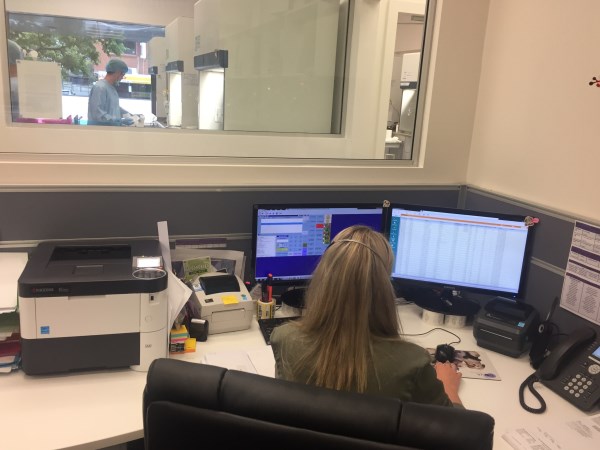
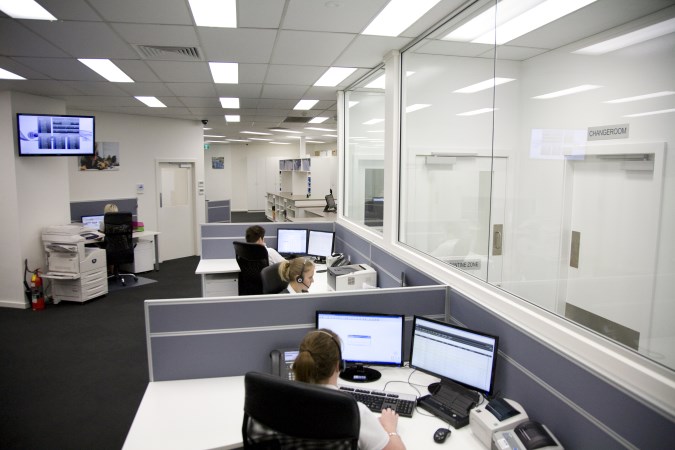
Here are some photos of our system being used there.


Also here is a youtube if you want to know more what they do.

Benefits Of SMS marketing

You need to communicate with your staff, suppliers, clients and everyone. The best and most effective method is SMS. It is actually incredibly effective, particularly with our SMS group buy which I am sure now are the cheapest in our market space, depending on your usage between 4 and 5.5 cents an SMS.

Here are some facts:

Almost every one of us has a smartphone (90%+) probably with the people you deal with the figure is even higher.

Almost all smartphones are within hands’ reach all the time much more than mailboxes and computers.

Delivery time is generally within seconds.

Your message once sent will be delivered to the person directly.

There are no spam filters blocking your message.

Today the average person looks at their mobile phone 150 times per day – every day, which means that it will most likely be read within seconds of you hitting “send."

Studies have shown that 99% of all SMS messages are read almost all within seconds of being sent.

In comparison:

Less than 30% of tweets are read.
20% of emails are read.
12% of Facebook posts are read.

The average response time for an SMS is ninety seconds, while for an email, it is almost three days.

SMS coupons are up to tenfold more likely to be redeemed (and shared) than newspaper or letterbox mail coupons.

This is why no other communication method has such a high rate of conversion.

If you want to know more, please let us know to get an SMS account.

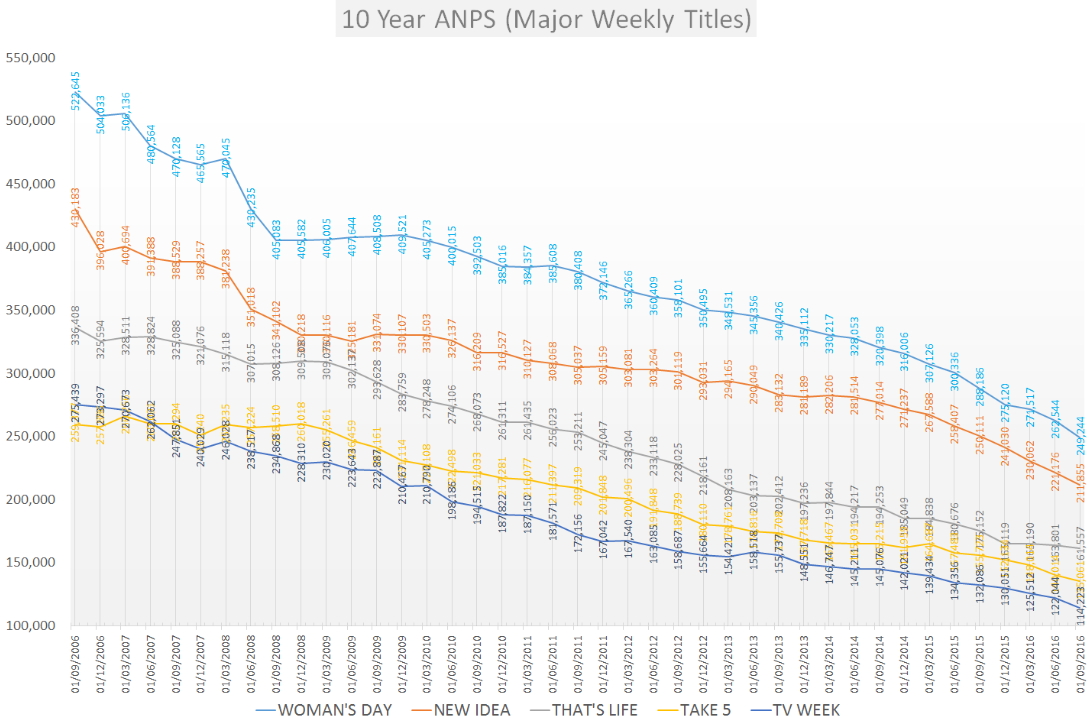
Circulation graph of Australia's leading Weekly magazine titles.

In Linkedin, this graph aroused a lot of interest when I shared it.

Unfortunately looking at these figures you will not see the big loses because the system of counting changed then but in the mid 90s, Woman's Day was about 1M copies (although that included New Zealand) and in 2001 it was in Australia about 530,000 copies.

The other point is I doubt the price has kept up with inflation, in 2008 from memory; the cover price of a Womans Day was $4, now its $4.40.

Soon in retail there will be no checkout

Amazon is coming to Australia, and one change Amazon are introducing in a pilot next year in the US a plan for getting rid of the checkout or the point of sale.

What they are doing is putting a network of sensors around the store. When you come in you activate the system through your smartphone when you walk through the door. Then what you do is pick up the items you want and when you are finished with your shopping walk out of the store. You will be billed automatically. No queues, no checkout, massive staff costs savings and possibly no shoplifting.

I am sure it will be quite a few years away before it goes into the mass market, but it's certainly something to think about. If you want to see how it works click here.

Adding services as an alternative to VIP discounting

VIP discounting does work, but its incremental sales lifts are caused by the cannibalisation of existing revenue by selling at a discount, product. So what are the alternatives to bring people into the shop? One Is called "the long tail" which works by finding other goods and services that people want and will come to your shop to buy.

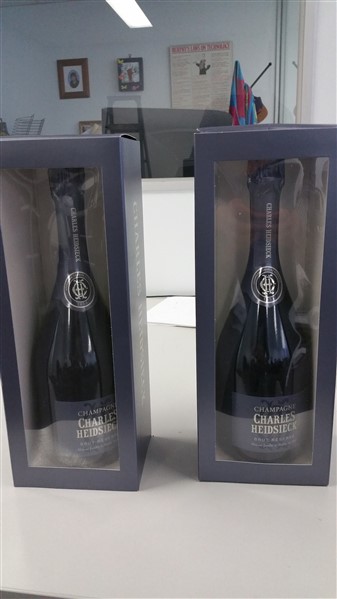
It works here is some wine that touch networks gave us because our clients have sold so much of their products (mainly telco products) but also many others over the year.

It brings into each of our clients that have an interface for an average shop about 120 people a month; the average profit on each sale is about $1.25 plus add-on sales. As you can appreciate with all the clients, we have it adds up to lot so explaining the wine we get.

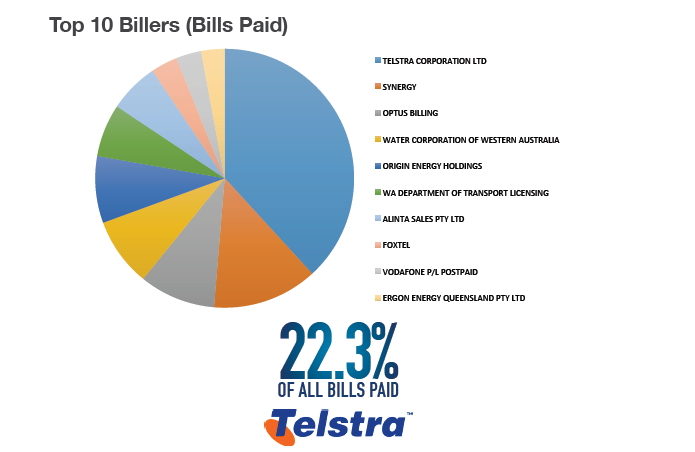
Another service is the bill payment; we have. Here is an analysis of the breakdown of the bills that get paid in our clients' stores.

Although many are not aware, the fact is that bill payment is a colossal business today. I am not sure how many my clients are doing but a typical post office does about 200/day. If you remember when I spoke of many of our clients getting cut off Bill Payments here for a few hours a short time ago, based on what people were telling me it was costing them about 5 to 10 customers an hour, that a decent figure.

Here are two inexpensive ways, to draw people into your shop by using the "long tail," if you wish to read up more on the theory. please click here.

A magazine monopoly in Australia???

In a story in The Australian on November 28, 2016, titled "Bauer makes overture to Seven West", it states that Bauer Media has made an offer to take over Seven West Media-owned Pacific Magazines. This is stunning as a monopoly occurring in newspapers in each state is something most people within the newsagency industry expected but not in magazines. If this story is so, it is accepted, and it gets ACCC approval, which will probably be needed, after that that means a magazine monopoly in Australia, with over 80 per cent of the Australian magazine market will form. Then if it follows what we have seen, be prepared for major reduction in many publications too e.g. Woman’s Day, Australian Women’s Weekly and New Idea.

Still I am wondering if there is any real alternative, as more consolidation is clearly in today's magazines environment required.

Minimum credit card transaction

This is a difficult question, that all retailers face, should they set a minimum credit card transaction? It gets more complicated with EFTpos as some banks in their merchant agreement state that a merchant cannot set a minimum EFTPOS transaction. So if you do make a policy, I suggest you check with your bank first. Still if you are thinking of setting a policy, note that cash is not free either of costs at the point of sale either. Anyone handling cash has labour charges, often processing fees in the bank, internal administration charges, theft, wrong changes, etc. I am sure if you add it up you are looking at least a percent or two lost no matter what way you go.

Still now most stores set a $10 minimum, and they do charge a surcharge but of course their customers are also within their rights to take their business elsewhere. So a client asked me to look at their current situation, which has a policy of no minimum spend and a 20 cent surcharge.

Here is what I found.

Under $20 they did 4527 transactions in a year for a total value of $26,120.35 about 7.9% of these were using some form of electronic payment, e.g. VISA, EFTPOS, etc.
Under $10 they did 3461 transactions in a year for a total value of $11,761.59 about 6.3% of these were using some form of electronic payment.
Under $5 they did 2521 transactions in a year for a total value of $5,129.61 again about 6.6% of these were using some form of electronic payment

As you can see the percentage using it, is not particularly different at small transactions, although it's clear that almost all customers prefer to pay cash at low amounts but the problem appears to be that sometimes the customer does not have the money. They have say $20 in their pocket, before they come. They go to a shop and buy a few things and their cash is gone so if you have a minimum spend, after that they cannot buy from them. Some get upset because of this, then this maybe another cost too.

As such I recommended that this client keeps his existing policy in place of no minimum spend and a 20 cent surcharge. I will discuss the effect of the surcharge on sales in another post.

Analysing the pros and cons of lay-by

There is an old business saying that you cannot manage if you do not have measurements. It is still accurate today.

That is why our point of sale software has heaps of analysis as well as reports.

Lay-by analysis is one such analysis reports.

I remember years ago credit card's suppliers were telling us that they would be replacing lay-by, but it did not happen, today lay-by is probably the most popular form of credit in retail, particularly if they have poorer people with bad credit ratings. Where it proven really useful has been for Christmas shoppers.

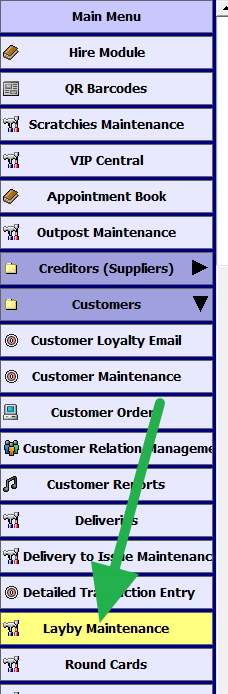
You will find lay-bys in our customer section

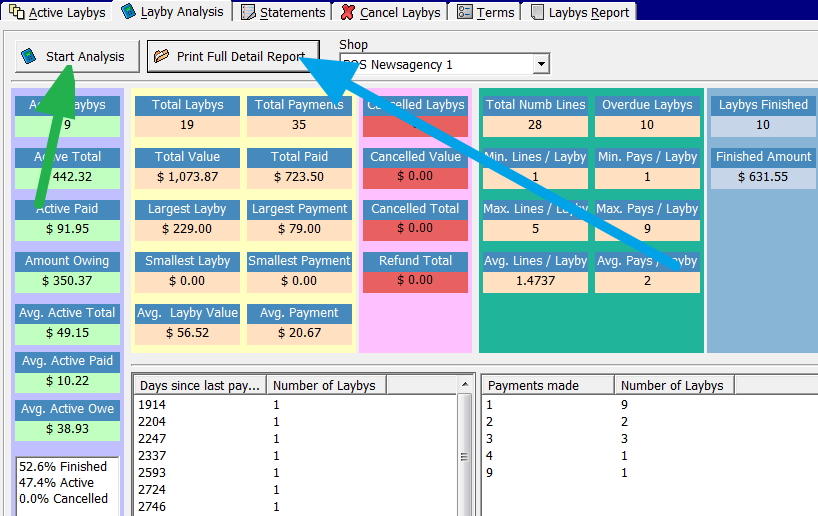
The analysis you will find there marked with a green arrow. Then when you press it you will get pages of statistics. Here is the start

If you press the blue arrow, you will get even more in a Full Detailed Report. Looking through them, I am sure you will find much.

It is just another example of how our pos software gives you the tools you need to drive growth.

New Queensland Small Business Digital Grants Program: Are You Eligible?

POS SOFTWARE


A few of my clients today contacted me very excited over some fantastic news that the Queensland Government has offered to assist small to medium-size business with up to a $10,000 grant to them for $10,000, to assist them in their digital services needs. That was where we were to come it since our integrated point of sale with its digital marketing website and social media services seems to fit the guidelines for this grant, which then would allow them to take their online marketing efforts to the next level. As this grant can include in part their own labour charges and is EX GST with an expenditure of $8,000 they could get a $22,000 grant for a website. I said it sounds too good to be genuine and I told them you are probably listening too much to a piper. Still, I immediately took it up with our legal R&D; expert. The offer is true.

The big problem I see is in the fine print which states that approximately 200 applications will be approved each year, distributed over the three rounds. That means out of this roundabout 66 applications will be accepted. I have no idea how many intend to apply, but I am certain the number applying is going to be well over 66, and I am confident that many of those applications will be very strong.

The other issue I did not like is that the offer is so broad that many business proposals could apply, you can use the money on online marketing audit, plan and implementation. Search Engine Optimisation, Pay Per Click Advertising (Google AdWords in Search Advertising, Display Advertising YouTube Advertising or Shop Advertising), Social media management and marketing plans, optimised landing pages, creating mobile-specific pages, content creation and infographics, implementing an online payment system for your website and more. That is a very broad range of products nor is it really a lot of money for some of these activities, SEO alone costs about a $1,000 to $2,000 a month and rarely works in my experience. Google AdWords can be about the same.

The rest does not appear to be unreasonably hard to achieve.

Your business must have fewer than 20 employees now.
The company must have an Australian Business Number (ABN) and be registered for GST;
The business operations must have a strong Queensland connection.

Still I do feel that for many, it can be a very good offer, we certainly I think could help you make a strong case that would fulfil the criteria and if anyone of our clients in Queensland has an interest in having a shot at it, I am also sure we could together create a truly strong application.

However, if you do want to proceed, we must move now as your application must be in by 9 December 2016.

Predictive Analytics

To be successful today, it is important that retailers keep in tune with their shops unique preferences and behaviour. However, there are too many stock items and marketing seasons to do it properly manually. The best way to do it is with predictive analytics (focus). These tools are generally too expensive for small to medium-size retailers, unless they have our point-of-sale system because we have embedded it into our software and give it out free. I think it's great as its both simple and intuitive. It does not require much training either to use. Less actually work then manual stock ordering.

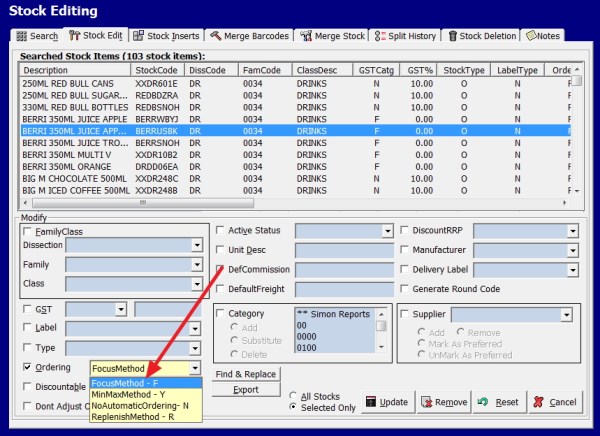
Let say you have a basket for tape. You cannot order limitless quantities of tapes as you are restricted by the basket size. So what our users can do is use focus ordering, it is an advanced type of "just in time" method of stock control, which allows you to plan how much stock you should have now.

What happens is the computer tracks the stock on hand, estimates the stock level required for these goods in the period (focus), if it thinks that the stock on hand is too low it can send an order to a supplier with the speed and accuracy that no-one can match.

It is easy to set up, and use for details click here.

With effective software, you can control your stock with relative ease.

For details on how to do this, please, click here