
Today, AI can help with writing, legal work, accounting, financial reporting, admin, customer communication, etc., in business. The fact, however, is that today the real choice is not finding the "best AI", but finding an AI that delivers the best value without becoming a massive computer job. Here, we will break down our hands-on tests comparing local vs. online AI to help you choose the exact setup that fits your shop. It can run either locally or online. Now, can a local AI replace an online AI for your business? The short answer is NO, but the real answer is it depends.
Key takeaways
- Cost is a major factor, with online AI services like ChatGPT generally costing a minimum of $30 to $35 per month.
- Local AI runs directly on your own hardware and can be free to run if you already own a suitable computer.
- Online AI is much faster and easier to use for everyday business tasks.
- Privacy is highly secure with local AI because your sensitive business information never leaves your computer.
- Hybrid setups that mix local and online AI can work well, but they often become messy in everyday retail use.
- Information on both systems is roughly the same
- POS system reports can be easily fed into a local AI, providing insights that are just as good as a paid online service.
What Is a Local AI and an Online AI?
A local AI runs entirely on your own computer, while an online AI runs on a server and is accessed over the internet. For example, a local AI might sit on your PC in your back room, while an online AI can be used anywhere you have internet. This may be a problem if you work both in the shop and at home. My local AI is on my home machine, and I cannot run it at work.
Today, local AI technology has recently taken a massive leap forward as Google released AI software called gema-4-31b-it, which can run on many computers and delivers very good results, sparking immediate interest among some of our clients. It directly addresses the two biggest problems many business owners are considering with AI right now: ongoing costs and data security.
Moreover, the big problem is the technical knowledge required to set it up properly. Based on my conversations with people who have done it, it is not hard, but they all already had a lot of computer skills. Finally, you must remember that cost is not only about money leaving the bank account. If the owner spends three hours trying to fix a local AI model after a software update, the real cost is management time. For example, those three hours could have gone into merchandising shelves, ordering new stock, or supervising floor staff.
How much better this model is compared to others available is debatable; there is a Chinese AI Software model, Qwen3.5, which I have used, and I think is almost as good. There are also some smaller versions, such as gema-4-2b-it, that can run on not-so-powerful computers, which is very good.
How long does a query take?
This depends much on the model that you use. I did a speed test using a question, "when was GST introduced into australia and when does it apply", I ran this many times using Gemma on my computer
2B it took an average of 4 seconds
4B it took 18 seconds
26 B took 25 seconds
31 B took me 1 minute 10 seconds
Not surprisingly, the larger the model, the better the answer. Now, interestingly, the older QWEN 35 B gave the best answer, taking 35 seconds. Overall, I found QWEN 35 B to be just as good as Gemma 31 B.
But this is the one that everyone seems so excited about gema-4-31b-it, so let us discuss this one.
How Much Does a Local AI Really Cost a SMB Business?
The true cost of such a local AI depends heavily on the computer hardware you already own, as the software itself can run for free. You generally need a very good computer from 2025 with a powerful graphics card to run a local AI smoothly. Unfortunately, this is not the sort of computer that retailers tend to buy for their shops. For example, a standard shop PC used just for scanning barcodes does not work for local AI. The computers that can run these models are more like the gaming computers that kids buy. If such a computer is already part of your normal business operations, then the local AI is effectively free. However, if you have to buy a $3,000 gaming computer just for the office, the cost isn't worth it.
Moreover, the next problem is the technical knowledge required to set it up properly. Based on my conversations with people who have done it, it is not hard, but they all already had a lot of computer skills.
Finally, you must remember that cost is not only about money leaving the bank account. If the owner spends three hours trying to fix a local AI model after a software update, the real cost is management time. For example, those three hours could have gone into merchandising shelves, ordering new stock, or supervising floor staff.
What Does an Online AI Cost a Business?
An online AI costs a predictable monthly subscription fee, usually starting at $30-$35. For example, a retailer can pay a flat $35 fee to ChatGPT and get instant access to the smartest models available.
This monthly fee gives you access to massive supercomputers without needing to buy one yourself. If you are a heavy user, however, it can cost much more because most online AI companies have strict limitations on how much you can use them per day. For example, one of our users, after writing 50 product descriptions in one morning, hit a limit and was locked out for a while. Because of these usage limits, many serious AI users end up having two different accounts. This means we are looking at about $65 a month to ensure the business never gets interrupted.
Cost is not just cash; it is also your time.
Is Online AI Easier for an SMB Business?
Online AI is definitely easier to use for a small retail business because the AI company handles all the technical background work. For example, a retailer can sign up with an email address and start writing an advertisement almost immediately. They are designed to be almost trivial to set up and use for the average user. Most of them offer free plans you can set up to test, so the risks are very small. For example, a shop owner can use a free online plan to write a quick Facebook post without entering a credit card.
Moreover, because these tools are so popular, finding help is incredibly simple. Most computer-literate people know how to use them, so it is easy to get staff or friends to help you if you get stuck.
Ease of use drives adoption. If software is hard to use, we will all ignore it.
How Fast Is Local AI Compared with Online AI?
Local AI is often painfully slow to use compared to the near-instant speeds of an online AI service. Even with a good computer, you do not have a supercomputer. For example, when asking a local AI to write a complicated refund policy, you might literally wait minutes for it to type out the words. This speed point should be considered very carefully by anyone who is busy. I ran tests on a $6,000 computer, and even after an online AI had given me an answer, I was still waiting for the local AI to finish. For short answers, local AI was perfectly fine. But when I asked questions that required a long answer, I ended up making coffee while I waited. This slowness makes certain tasks unusable. If you are dealing with a long, complex legal problem, like a rental agreement, where you need to ask 20 different questions back-to-back, the waiting time makes it unusable. What am I supposed to have 20 cups of coffee?
Size of question
A main problem is that local AI cannot handle as big reports as online AI. This is a real problem if you want to run with a lots of information.
What Are the Privacy and Security Trade-Offs?
The main privacy trade-off is that online AI sends your data to the internet, whereas local AI keeps it on your machine. For example, if you feed your profit margins into a local AI, that highly sensitive data is going nowhere. Data security is one of the biggest concerns for SMB retailers right now. When using an online AI service, you have to ask yourself: where is this information going? For example, if you paste a customer's private address into an online AI to format a shipping label, that data is now stored on a foreign server. You must consider who can access this information and what damage it could cause if it falls into the wrong hands. A local AI solves this completely by keeping the information inside your computer.
Privacy is local AI's biggest strength. Your data never leaves your computer.
How Good Is the Quality of Information from AI?
The overall quality of information from a local AI is excellent and often just as good as that of an online AI. For example, when asking a local AI to explain a tricky accounting term, it provided me with a deep, accurate answer.
Then I fed a local AI several long, highly difficult tests and was very impressed by the depth and quality of the information it provided. Overall, I found the answers to be good, and often better, than those from an online AI service.
Having a smart AI locally means you get top-tier brainpower without paying a subscription. However, there are two major problems retailers must watch for in the quality of this information.
How Current Is the Update Information?
This is the most important problem: a local AI's knowledge depends on its date of manufacture. Here, Google trained it up to January 2025; as such, it knows absolutely nothing about the recent RBA surcharge ban. It also does not know the local prices of the products I asked about. In business, one often needs the most up-to-date information. Well, you cannot get such answers here. What you need is a plugin that is very slow in use.
For SMB businesses, this lack of current events makes a local AI impractical for many uses. This is why I do not believe a local AI is a total solution.
AI Hallucinations
An AI hallucination is when the AI goes crazy and confidently makes up nonsense. One of the biggest problems with AI is that, when asked a question, it can simply make up answers. It happens with any AI, and with the state of today's technology, you have to check the answers yourself manually. While I would not say that in my tests, "local AI hallucinates more", it definitely had fewer safety checks. This is because online AI companies have gone to great lengths to address this problem.
You need to check the local AI much more carefully. There is an old warning about free advice: if it is free, you'd better check it.
How Can Local AI Work With Your POS System?
I found that local AI can easily process and analyse daily reports, as long as they are small and generated by your POS software. For example, I exported a few weekly sales reports and fed them directly into the local AI to identify which items are selling best. I specifically wanted to know how this technology handles raw retail data. I had absolutely no trouble doing so, and I was incredibly impressed with the quality of the information that I got back. The local AI instantly read the numbers, spotted the trends, and gave me a clear summary of what was happening in the shop. For example, the AI correctly noticed that umbrellas sold rapidly yesterday and suggested I move them to the front counter.
For this specific job of crunching numbers, I consider the local AI comparable to the paid online service. It will allow you to get free deep insights from a Point of Sale (POS) system without ever uploading your private sales figures to the internet.
Should an SMB Business Use a Hybrid AI Setup?
A hybrid setup is when a business uses both a local AI and a free online AI simultaneously. For example, a shop might use a private local model to read their financial reports, and a free online service to look up current news.
Because many online AI tools offer free plans, many SMBs want to try both. You may consider it, although it is much messier as you need to manage two systems.
Moreover, for many, it is clearly an attractive idea. You keep your privacy when required, while still using online AI when you need web access, faster speeds, or fresher information.
It will work if you are clever. What you might do is go to an online service and ask it, "What factors are important for reviewing a commercial lease?" Now, you get the answer, put it into a local AI, and say, "Based on this online output, what do you think of my private lease document?" It will work, but it's not a good solution as there is always more to consider.
Where Does Each AI Fit Best in Retail?
We were all very impressed with the quality of local AI information, but this is really a decision about the correct fit.
First, for most SMBs, an online AI is a better starting point. It is simply easier, faster, and much more polished for beginners.
Moreover, local AI makes perfect sense when you already have the gaming-style hardware, care strongly about your privacy, and are happy to spend more time.
Where online AI usually fits best
- Marketing campaigns and seasonal store promotions.
- Finding current product information from suppliers.
- Researching current events and news.
- Asking general legal or business questions.
Where local AI usually fits best
- Writing internal notes and staff procedures.
- Sensitive drafting that should stay only with you.
- Repetitive writing on a machine you already own.
- Use cases where avoiding monthly fees matters more than fast speed.
- Processing private financial reports.
- Analysing reports from a pos system.
- Customer communication and email drafting.
Conclusion: Making the Right AI Choice
Ultimately, you do not have to choose the most famous AI; you have to choose the one that makes your retail life easier. If you want instant help with marketing and do not mind a small monthly fee, online AI is your best bet.
However, if you want to analyse sensitive reports from your pos system and already have a strong computer, local AI is an incredibly powerful, free tool. Take a look at your shop's daily tasks, try out a free online plan to get a feel for it, and then decide if bringing the brainpower locally is worth the setup time.
Experiment further
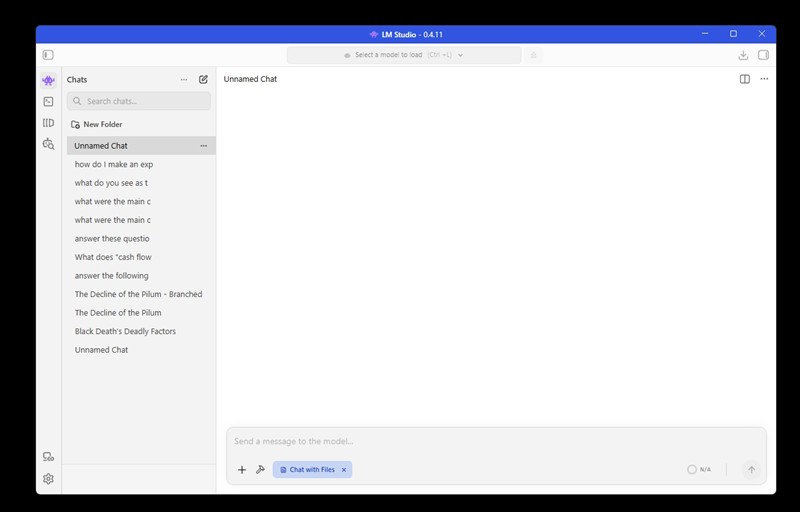
If you want to experiment on your computer, visit LM Studio and download a copy. You can find instructions on how to get started there. There’s also a mobile version available on Google Play, which is handy if you’re somewhere without internet access.
To run a decent AI in LM Studio, you'll need a computer with sufficient video memory (VRAM) to process AI models smoothly. For instance, if you want an AI to securely analyse offline sales data from your Point of Sale (POS) system, you need at least an 8 GB NVIDIA graphics card, the more the better, my VRAM is 64GB, and it's slow. Next, your system RAM needs about 32 GB and using an SSD would be good to ensure the AI remembers long conversations without lagging.
Written by:

Bernard Zimmermann is the founding director of POS Solutions, a leading point-of-sale system company with 45 years of industry experience, now retired and seeking new opportunities. He consults with various organisations, from small businesses to large retailers and government institutions. Bernard is passionate about helping companies optimise their operations through innovative POS technology and enabling seamless customer experiences through effective software solutions.