Point of Sale Software

How to avoid POS Software Discount fraud?

Well, I thought I should add that a similar process can be done with discounts. I spoke about this before, but I think it should be brought up here again as the emphases is different.

What happens is a staff member rings up a sale, charges the customer the full amount, then put on the transaction a discount and keeps the discount or just gives his mate a very good price on some items. They cannot issue a receipt so what they need to do is wait until the customer leaves before finalising the transaction just in case the customer does ask for a receipt.

At the end of the day the tills balanced but money is missing.

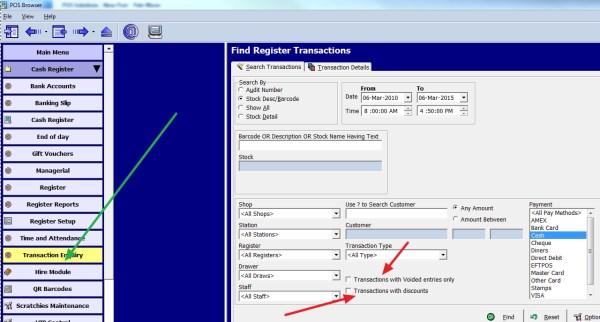
See green arrow to get to transaction enquiry

See the two questions marked in red. In this case, we are following the transactions with discounts

To continue on what to do please press here.

Census failure

Despite spending millions of dollars, our first online Census failed catastrophically. Right now almost ever Australian knows it is a total fiasco.

The website is still down, if you try to call to ask what is happening you cannot get through to someone on 1300 number.

Last night's census debacle provided many lessons in how not to manage a project, here is some:

1) Never promise what you can't deliver.

2) Think before you speak, if it was a hack as was first claimed, then how can the census reassure people that our data security is guaranteed?

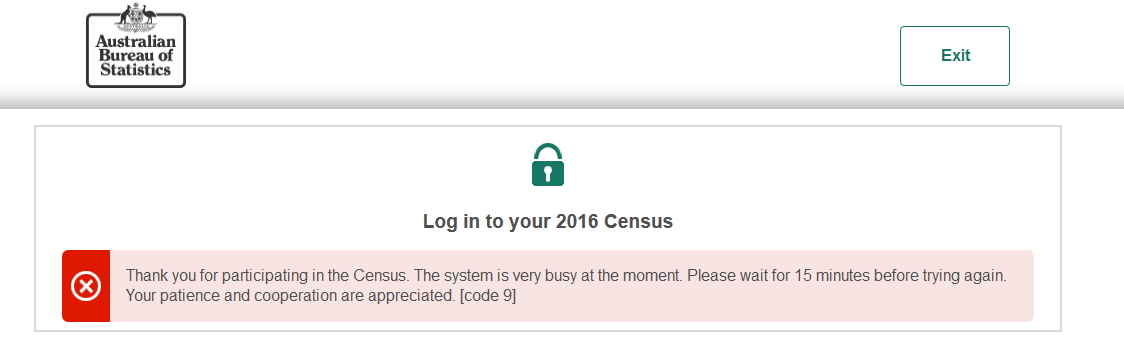
3) Supply people with meaningful information. People who tried to log on after many attempts yesterday, and today are getting this message.

This 15 minutes when I tried again 30 minutes later thinking what they said was true still showed the same message that the website was still down and to try again in 15 minutes.

This has now been going on for a day.

Maybe we should all send the census a fine of $182 per day until the situation is resolved.

Lock down your retail POS System

If you ask me, this is common sense, and this is what many of my clients are doing now.

You can and should put all the security you can on your point-of-sale computer, but it's never going to make it 100%. Even the top security experts in the world cannot do that, but the simple truth is that almost all computer data breaches and ransomware attacks can be avoided by just being careful.

Do not allow employees or yourself to play on the computer, those computers are for work not fun. Make a policy about it. If you are prepared to let your employees surf on a computer on Facebook, celebrity gossip, download torrents, look at porn or do online gaming let them use their smart phone and your wifi so they are not connected to your network. If you are going to do emails on a computer attached to your system, be very careful where you go and what links you press. I know people that have a special accounts machine that is disconnected from their POS network. They transfer files if required only using USB sticks.

Avoid if possible online financial transactions that might reveal your passwords or personal information.

Frequently changing your passwords

Watch who is looking over your shoulder.
Do not let unauthorised people get into your system.

etc.

This is not rocket science, but it works.

If you want to enforce a policy a one good software, I recommend is to put on your network Norton Family available here.

The free version should be good enough for most people and tell all your staff, in fact put a notice so everyone can read that you have monitoring software installed, and that it allows you to monitor everyone on your network. It's not a 100%, but it should be able to do about 90% and it does monitor a lot. Together with your cameras it makes a powerful monitoring service.

Locking down a system can save you a lot of grief.


If you are running Windows XP or Server 2003

Since Microsoft released an edict that it would no longer use SHA-1 for code-signing or its certificates after January 2016 one by one, companies have been dropping SHA-1 and go to SHA-2.

So from the start of this year we have been busy helping our clients prepare for the SHA-2.


Now Tyro has announced that they too are dropping SHA-1. This means that anyone using an old version of Windows XP needs to either upgrade it too SP3, which is free, or if they want Tyro to keep working go to a more advanced windows. If so we have very good pricing on Windows 7 and we can do even better on Windows 8 but I do not recommend Windows 8 if you want now but our advice would be to go to Windows 10.

There are good reasons to upgrade beside this.

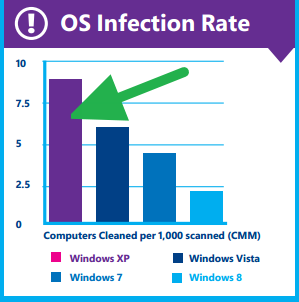
For example, the older the operating system is the more vulnerable. It is to the security threats. Here is a chart from Kaspersky Lab where I have highlighted the XP infection rates in green. Its almost triple Windows 8.

Furthermore, new servers with SSD drives are much faster. How much is it costing you in wasted time for you and your staff just standing in front of a computer while its processing?

POS Software: Updated the scripting

Newsagency software automatic update

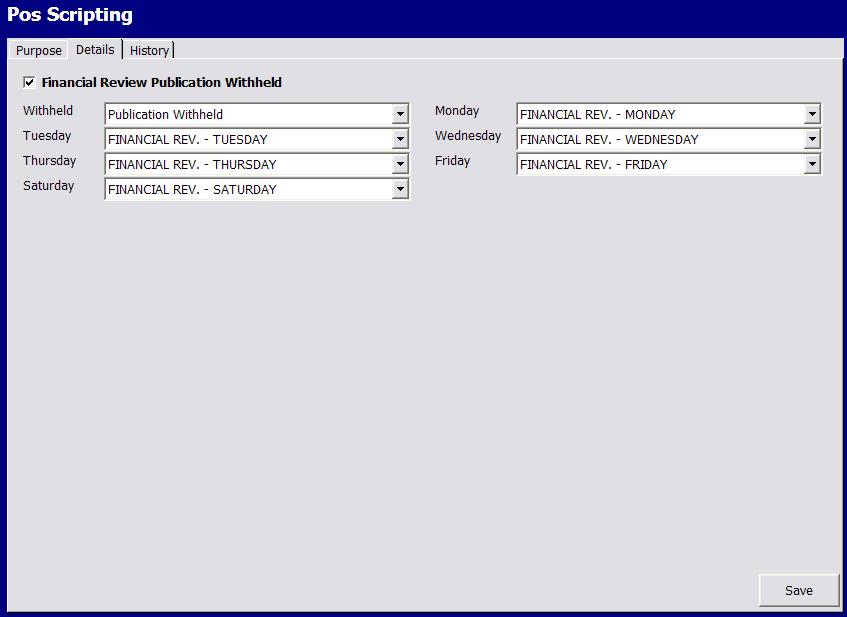
What is now indispensable in POS systems is the automatic update of newspaper price changes, the setup of bumper editions, and newspaper stops/starts.

Well the scripting it's getting better all the time.

So far, these are the updates in the past 30 days to this function.

[2016-07-26]: Added NT News to Pos Scripting

[2016-07-26]: Added Sunday Territorian to Pos Scripting

[2016-08-09]: The Wednesday edition of the Weekly Times will change from $2.50 to $2.80 GST inclusive from Wednesday 10th of August.

[2016-08-27]: The Sunday edition of the Herald-Sun will change from $2.70 to $3.00 GST inclusive from Sunday 28th of August.

[2016-08-27]: The Sunday edition of the Sunday Mail will change from $2.70 to $3.00 GST inclusive from Sunday 28th of August.

[2016-08-27]: The Sunday edition of the Daily Telegraph will change from $2.80 to $3.00 GST inclusive from Sunday 28th of August.

Assuming 5 minutes for each of these that is just in this about half an hour of time saving over the old systems like DOS, which require manual entry.


newstobusiness have made a new offer to our retail clients

POS SOFTWARE


Its for their Let's GROW seminar which is a FREE 2 hour seminar for retailers.

It will be held in Sydney on the August 10 - Limited seats. For more info and booking details please click here

{link has been removed}


Here is one of their tips, there will be six more at the talk.


Tip 2 of 7/ Ask every customer to buy something additional from you.


It costs you nothing to ask - this script converted 24.8% of customers to say 'yes'!
The store has been doing it every day for over 16 months.


Click on this youtube here for some more tips


Retail Better Practices for Managing Stock

Most of you would have heard of the 20/80 rule which states that 80% of all rewards is done by 20% of the work. This formula seems to come up repeatedly in just about everything, for example, a person who works in a council told me recently that about 20% of the people make about 80% of the complaint.


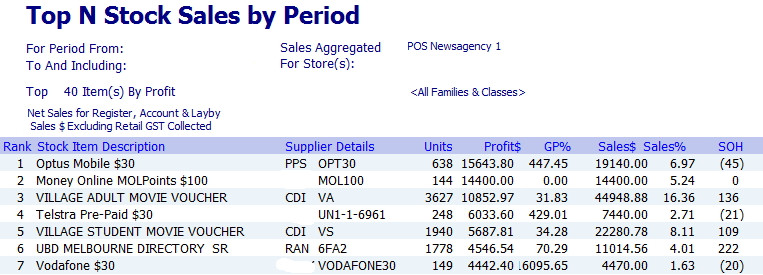
What is not often realised is it's heavily weighted on the top so that it is quite common that about half a percentage makes about 30% so much that in retail often, your top 40 stock items make up about 25% of your shop sales?

So when you start thinking about stock, it is important to identify these items. These are your *A* stock. It will not take long if these are not managed properly for you to lose a big bite in profitability and long-term sustainability of your shop.


It is easy enough to find these items in your point of sale system.

Go to the main menu
Register reports > Stock

Top N Stock Sales for a given period.

Put in the last twelve months, select 40 items, order by number or profit depending on your view and out will come a report similar to above. These *A* items should be monitored continiously.

By having solid stock management practices with our tools, you can be sure your business is supported.

Windows 10 users get ready for the next update

Windows 10 users need to get ready for promised Windows 10 Anniversary update on their point of sale system as its big and so will take awhile to load.

In the traditional manner, I expect that for most of our Windows 10 users, they have no decision to make as they will be getting this update, whether they like it or not. It is part of Microsoft's switch in strategy that rather than have separate systems; they will have continuous incremental updates.

Like many, I am still in two minds about Windows 10, but I do feel that my users should not have old antiquated systems, and they are safer and better off with the security patches despite all the problems then without them. Furthermore, I strongly believe that they should have the latest in technology that we can possibly give them.

I like the new start menu, the improvements to Cortana - its nice to start the day with a comment "Cortana tell me a joke" and she does and I particularly like the improved memory control with the Task Manager.

We have also tested our software though the Windows developer channel of this latest update. Our software works well on it. Furthermore, a patch for our POS Solutions Software will be coming soon that will allow you to take some more advantages of Windows 10 improvements in our software.

Unfortunately, there is no official free update available to Windows 10 from Windows 7 and 8 any more although there are ways to cheat the system and to receive the free upgrade. So I am wondering if part of the purpose of this upgrade is to close these loopholes.

In any case Windows 10 is not that expensive, and I think it's worth upgrading as Windows 10 is better than Windows 7 and 8 and after this upgrade Windows 10 is better than the current Windows 10.

Speeding point of sale with a Hard Drive Upgrade

These days, many people are upgrading their main computers to take advantage of the new SSD drives. What is happening now is that as computer speeds are increasing, so it is the harddrive that is the bottleneck! That is what is wasting you, your customers and your staffs time.

However, some intend to upgrade when their harddrive when the current one runs out. The problem is knowing when? You do not want one-day someone to ring you up from the shop to tell you nothing is working. We cannot do anything so you need to come to the shop now. With the older harddrives, you never know when they fail, it acts all right, it

even reports that it's okay but often this is misleading. The problem is that Windows if it detects a problem with these drives automatically fixes it. So a harddrive appears healthy until it drops.

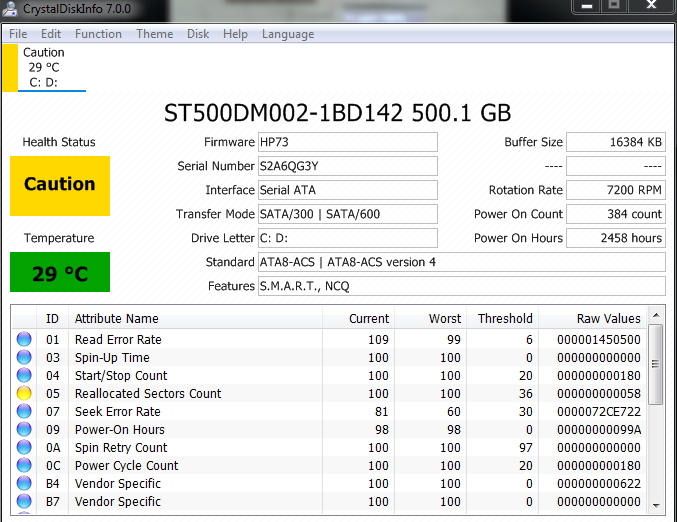
What you need to do is a hard disk test. Here is one free program that can do it for you, Click here Crystal Disk Info and select the Standard Edition, and run it.

It will give you a lot of detail about your harddrive and as well a status report. Here you can see that the harddrive I tested is in a "Caution" status. This means this disk needs to be changed soon.

If you replace it, I would strongly recommend a SSDs (Solid-State Drives) as they have heaps of benefits, but the two most important ones are speed and reliability, mainly because unlike the older harddrives they do not have any mechanical or moving parts so once installed it will speed up your whole network.

Why are there Dragon NaturallySpeaking changes in your point of sale?

POS SOFTWARE


Occasionally some people have commented that some updates; we do refer to the use of the software Dragon NaturallySpeaking, when they ring up, they are told not to worry about it.

Dragon NaturallySpeaking is a speech recognition software. What it allows is skilled users to work a computer by speaking to it. The main reason what we use if for is for people primarily with multiple sclerosis, although we do have people with other dexterity impediments and people with a variety of physical disabilities using it too.

The next question is why this package, well, firstly; we did not pick it but the Multiple Sclerosis society picked it, and we have worked closely with them, so we adopted it and followed their standard. As far as I know when I spoke to the Multiple Sclerosis society, we are the only ones in our market space offering this type of support. Having said that in our experience, the free Windows Speech Recognition software does work, but it's not as good as this software.

Many people with such problems actually do not tell their employers until they must. Which is fine but it is a problem is many of our clients as they are family businesses? They know when a family member has such a problem. They also lack the resources to keep these people all the time under care. So often these people with these conditions are taken to work where they sit all day with little to do. When I talk to them, almost all of them want to do something. Anything.

As a computer does not involve physical work. Sometimes if we are lucky, we can get them productive on a computer.

First, we try special keyboards, mouses and filter key software. However, some people shake too much. They lack motor skills. So what we try with some success is Dragon NaturallySpeaking. This allows them to control a computer by talking. Unfortunately, it has not proven an easy program to work. When it does work it allows such people to work, but the big problem is that it requires a lot of skill with this software. Fortunately, the Multiple Sclerosis society does provide training.

Often they end out going at a slower rate then most, but they feel that they are doing something useful. They can also use it to keep in touch with friends though Facebook, email, and they can read or listen to newspapers and books.

As such we support it so that is why it comes up occasionally in updates.

What is the best retail loyalty programs?

POS SOFTWARE

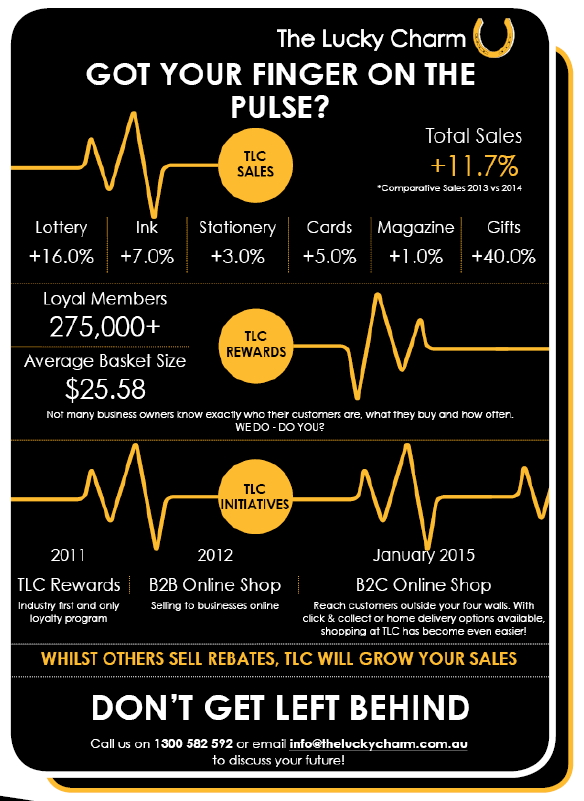
I was reading today about the Bauer program here on Reader Rewards, which is a loyalty marketing program to increase sales of their products. 


According to the article, it lifted sales by 1.6%, which is believable for a loyalty program but as the article makes clear it is not primarily a loyalty program but a data collection program. This is the point of all good retail loyalty programs, that extra percent or two you can pick up by getting the customer's information to market to these people. That way, they buy more by either making bigger purchases or buying more often depending how you structure the program. This is what justifies the cost of the program, and it is what your program aim.

And they do buy more if it's done properly. You can see it on the Average Daily Sale value, Units Per Transaction, Margin on Goods sold compared to the non-member customers.


What is also important is that not only do they buy more, but as they are happy that they get others to join such as friends and family.

In my experience, the biggest mistake retailers make when launching such a program is that they do not communicate enough to the members; you should not be waiting till they come into the shop, if you do that many of the members of your program will just forget you. You need to communicate with them online.


POS Systems: Return Fraud

Shoplifting in a store

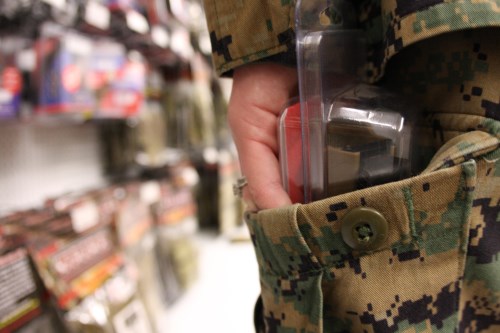
Here are a list of return fraud at the Point of Sale that I have seen.


People have brought items, left the shop and subsequently come to back. Then they grab the same items off the shelf, next go to the Point of Sale, show the receipt and demand a refund.
Possible solution: A good camera system.

People buy an item, e.g. a book, read it and then come back to return it.
Possible solution: Unknown but its a toughie. It happens a lot in the clothing industry too. A guy is going to a wedding and needs a suit. So he buys one, uses it once and comes back, stating his wife or girlfriend did not like it and wants his money back. On the positive you can demand before you do a refund that the items are in marketable condition so at least you have not lost anything.

People come in with a fake receipt and the goods and demand a refund.
Possible Solution: Scan all receipts and see what is in your computer system. A fake receipt will not be in your system.

Senior employees process fake returns. They just look for a high priced item recently sold, then do the documentation for a return and keep the money.
Possible Solution: All returns have to be signed by the employee who must put the item and this signed return form together until you inspect them. Only then can they be returned for sale. One point you need to watch here is that the item attached to return form is not one straight from the shelf.

A variation on this fake return that I have seen is that the goods were return, and the refund paid but your client only got part of the refund, e.g. the price less delivery charge and the employee kept the delivery charge.
Possible Solution: All returns before payment have to be signed by your client too with the value paid clearly marked. This document is put aside until you reconcile the amounts.


Do you have more to add?

Free email marketing your retail business using point of sale

Today email is free. Several of my clients take advantage of this by sending email newsletters free. The most popular method of sending such newsletters by far with our point-of-sale system is with MailChimp.

It is one of the best solutions for small-business owners who are just starting email marketing campaigns, mainly because of its free service. For those starting (learning) you can send monthly 12,000 emails to 2,000 subscribers free. This isn’t a trial so you do not need to even put in your credit card details. So my advice try it first, if it does not work out as say you feel after a while that you want something better well at least you will have acquired the necessary experience and knowledge to move on.

Of course, this free service will not come with the necessary bells and whistles that many experienced marketers that knows more and needs more features then clearly for you this is not the best option.

Now the first step is to collect emails, lots of them. The first step is to get our existing client's email addresses into the system.

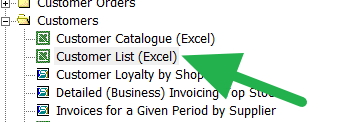
Please go to cash register reports.

Then go to customers.

Once there select

Customer List (Excel)

Now run the report and it will give you a listing of your customers and their email addresses. You can import that list into MailChimp. I would recommend doing this regularly. That way, your email marketing has all the latest email addresses.

Now run a contest in your shop, to build up your loyalty program. Some ideas my clients use, a free second change at lotto, a cake, a gift voucher, etc. To enter you need to fill out a form or deposit your business card. What you need is about 500 to get it going. We could supply you for your geographic area a list of email addresses for the local businesses too to help out.

Now what you need to do is write an email newsletter which is not much harder to are then writing an advertisement. Make sure you do it at least once a month.

The read rate is about 20+% so on 500 emails you will have 100 readers which is a good start to build on. If you need any help, let me know as I use it and feel I know it very well.

Try using your point-of-sale system to market your business.

Note about Spam.

There are strict laws in Australia about spamming, and check with your association first before sending any email newsletters.

My understanding of the law and I am not a solicitor nor expert in such matters is that if a person gives you, an email address say on a business card, then its okay to send them an email newsletter. If they are in a business that you supply goods that they require like a tap supplier, you can send an email newsletter to a plumber about taps but a solicitor even though they use taps too in their office, you cannot send without permission.

Above all make sure that your email newsletter has your name and address, and an unsubscribe note; you can get into big trouble if you do not.

Magazine distribution report on newsagents

POS SOFTWARE


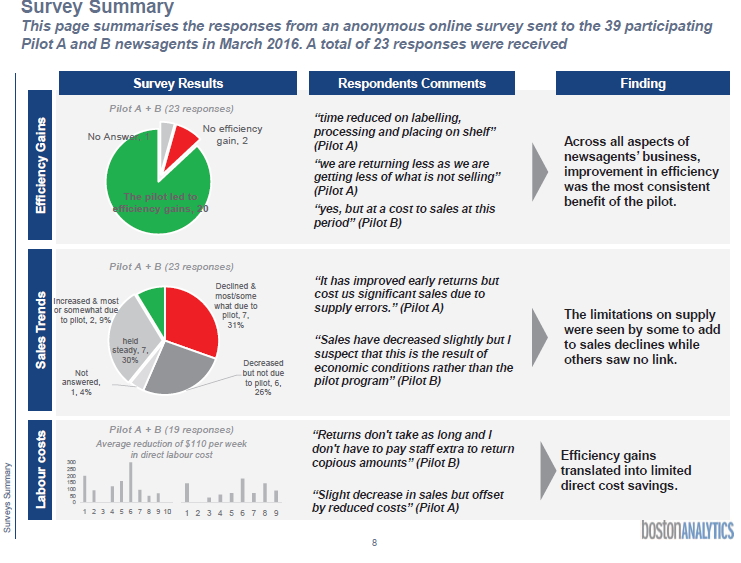
The magazine distributors requested the ACCC that they be allowed to do a magazine distribution trial. This resulted in many responses from many interested parties. As a result, they decided to make a hearing. I was invited to attend. Where it was decided to allow the magazine companies to do trials on magazines. The Magazine Networks then engaged Boston Analytics to assess the results of their tests. This report of these trials is starting to be released. We received an advanced copy today as we have been closely involved probably more than anyone else, and I expect in a few days everyone interested will be able to get their own copy [[ here]].

Overall what will happen at present is in doubt, as it has greatly changed magazine distribution recently with the exit of Bauer Media, leaving Gordon & Gotch, which has taken over much. Gordon and Gotch never seemed greatly interested in this project, so what happens from this moment in time on this is unclear.

Overall, I would like to make some comments.

What the Magazine companies did was divide about 60 shops into three groups, the first group (A) Stores, they limited supply to those magazines that they thought could sell, and they gave additional layout and range advice. The second group (B), all they did was limited supply to those magazines that they thought could sell and the last group (C) they did nothing but made sure that they were similar shops, so they could compare the results.

What they found as a result of the trial.

Group A - Sales dropped 8%, and its return rate was 39.2%

Group B - Sales dropped 13%, and its return rate was 38.5%

Group C - Sales dropped 3%, and its return rate was 47% (these figures, I averaged)

Now before you think between A & B groups that there is a big difference, one shop in group A in the middle of, the trial gained a huge subagent, so increasing its sale of magazines by 58%. So I think it should have been removed, but it was not and if you remove this shop from the mix, I get Group A and B as having an almost identical result say about 11% drop.

To me, these figures do not look that good. Yes, there is an 18% drop in returns, which would save a shop much in time and work, but I think most would say that saving is not worth an 8% drop in sales.

It is interesting to read the comment at the end of the report by newsagents here which I think agrees with my conclusion.


Update: Although in what many involved in this project would consider bad faith and a blatant violation of trust, this document was recklessly published early by a competitor. You should not do things like this. In any case now the document, however, is available at the above address for viewing and discussion.

 

Are you scanning in your point of sale software?

Let's take a look at %Scan, which is consider to be one of the five most important retail KPIs in modern retailing, and it can be easily generated from your software program.

This KPI tells you where you are scanning, so you can determine where are you not scanning?

If you are not scanning, besides taking longer to process, you are probably not using point of sale.

So let's look at the %Scan KPI to see where the problems are, the lower the figure the low percentage of items are being scanned.

To get this KPI, please go to cash register reports

Then go to sales

Once there select

Dissection Sales / Profitability for a Given Period.

Now run the report with a year of data.

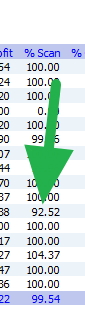
What you will see is a column with %Scan. Now if you look through this list, you will see an item with 92.52%, which is the lowest. This is clearly where most of the problems are, and this row is what you should investigate.

Note the 104.37% that you can see refers to double scanned items, which our system can handle, but we will discuss them another time.

POS Software: Newsagents have more newspaper price rises

Your point-of-sale system will soon get a script for the coming price increase of these newspapers that will be automatically updated. Its script number 2349.

For those on DOS who need to do these changes manually here they are.

[2016-07-22]: The Saturday edition of the Daily Telegraph will change from $2.20 to $2.40 GST inclusive from Saturday 23rd of July
[2016-07-22]: The Saturday edition of the Courier Mail will change from $2.20 to $2.50 GST inclusive from Saturday 23rd of July
[2016-07-24]: The Monday to Friday edition of the Geelong Advertiser will change from $1.40 to $1.50 GST inclusive from Monday 25th of July
[2016-07-22]: The Saturday edition of the Geelong Advertiser will change from $2.20 to $2.30 GST inclusive from Saturday 23rd of July

If your EFTpos is offline at the point of sale?

A notification now will come on the screen to say if an PC-EFTPOS Unit, e.g. NAB Commbank ANZ, etc is offline.

This will stop staff members from putting through the transactions without realizing the EFTPOS unit is offline before trying to put through a transaction.

Why the Magazine distribution report is puzzling?

Several people asked me today about the Magazine distribution report to the ACCC on magazine retailers. Based on its own criteria, the proposed model failed. It does not show that the Magazine Networks, could do a significantly better job of distributing magazines then the existing system based on the model they proposed. It does, however, leave questions. The reason everyone thinks the trial failed was because the control group sales which were similar shops to those in the program which they were measuring did amazing well in selling magazines. The control groups magazine sale dropped only 3%. The current industry average is an 8% drop in magazines while the historical drop of magazine sales based on the report is 6%.

If this control group magazine sales had fallen 6% (historical trend) or 8% (industry average) we would all be saying this trial was a great success.

This brings up the issue that I spoke about from day one about the lack of transparency in this trial. We do not know who the control group are so we cannot determine what is their story.

Let me say this in the stores that we measured with our POS software we found exactly what this reports states that sales of magazines continued to drop within the historical trend but that the workload had dramatically improved with an average saving in cost of handling a magazine department of over $5,000 a year.

If these trials stop, I predict the workload in these shops will go up and the magazine sales will continue their historical drop.

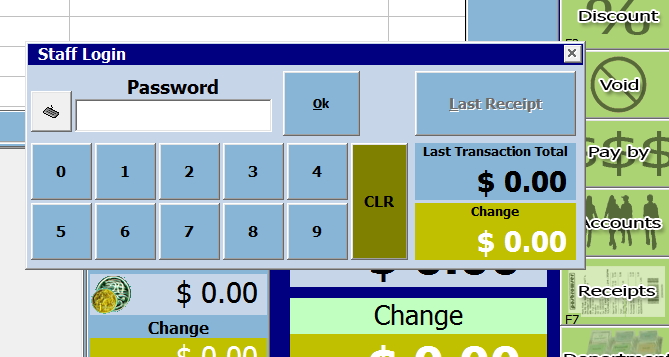
Change now your passwords in the point of sale system

In Australia, most organisations ask that you change passwords two to three times a year and its not that hard as I will show.

Why? Although I have spoken about some very sophisticated ways, people break into your POS system, the fact is that most hacks are not external but inside jobs. The hacker is known to the victim, and the cost is often huge. For example, I know of one retailer not a client of ours fortunately that had $250,000 stolen by an employee over almost three years.

How do these people get the passwords to do this, generally from poor password security, for example, they see it written down; they see it as you type it in, you tell them, etc.?

Tip

If you are reluctant to change passwords because of memory issues, here is a tip that although not as good as changing the password, this will help.

Say your password is yummycabbage

A password cracker like here will take about two months to crack it.

Now as its the 2 half of the year put in the front or the end either *2.* or a *B." If you want to be more creative by all means do so eg put in B2.

However just putting in now 2.yummycabbage means this password cracker will need two years.

Anyone inside your organisation that knows your password is yummycabbage will not be able to break in.

Change your passwords now.