Point of Sale Software

Here are some Articles from the Blog Subject - Retail credit management -

Stop Retail Cash Leaks

POS SOFTWARE

Struggling with retail cash flow?

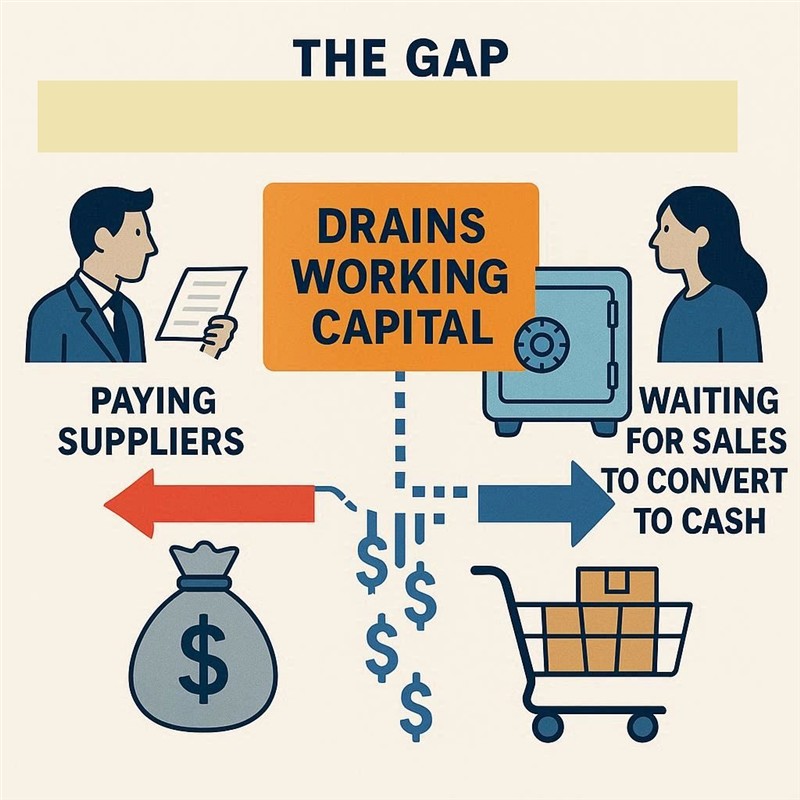
Running a retail shop or newsagency involves managing foot traffic, staff, and stock, but often overlooks cash flow. The gap between paying suppliers and waiting for sales to convert to cash drains working capital.

Key Takeaways

  • Retail cash flow is the critical timing gap between money exiting the business for inventory and returning through customer sales.
  • Inventory management requires identifying slow-moving stock that traps working capital and prevents investment in high-value items.
  • Credit control policies dictate setting strict limits for customer accounts, regardless of the client's size or government status.
  • POS systems automate credit decisions by enforcing warning thresholds and blocking transactions when accounts exceed their limit.
  • Cash flow forecasting involves tracking weekly cash inflows and outflows to predict shortfalls before supplier invoices become overdue.

What is Retail Cash Flow?

Fundamentally, retail cash flow is the net balance of cash moving into and out of a retail business at any given time. It represents the actual cash you have on hand to pay the bills, rather than the theoretical profit. It is all too easy for a retailer to show strong profits on paper but have those profits tied up in massive stock orders, leaving the owner still struggling to pay staff wages.

Consequently, understanding this difference is the first step toward budgeting stability. Profit indicates that you are making money, whereas cash flow dictates whether you have the actual funds available when you need them.

Therefore, comprehending this timeline entails careful review of your cash flow management. When you bridge the gap between paying out and getting paid, you instantly reduce the stress of running an independent shop.

Unfortunately, poor cash management is a silent killer in the Australian retail industry, and the problem is not getting better.

What Are the Most Common Cash Flow Problems in Retail?

Usually, the most common cash flow issues in retail are slow-moving stock, overdue customer accounts, and poorly timed supplier payments. These problems don't usually make a loud noise; instead, they gradually choke your working capital over several months.

The Trap of Dead Inventory

Primarily, slow-moving inventory penalises your business twice: it depletes your cash reserves during purchase and paralyses your buying power while sitting unsold. Every item sitting unused on a shelf is, in effect, a stack of five-dollar bills you cannot use to pay your electricity bill. For example, holding onto last year's calendar stock in February is a direct drain on your shop's working capital.

Thankfully, modern reporting tools in your POS System can identify these items. Use your old and dead stock reports at least monthly.

Over-Ordering Without Data

Similarly, buying stock on a gut feeling rather than hard data is a guaranteed way to freeze your cash. Buyers often order heavily into new product lines, hoping for a trend, only to find their customers are not buying them. For example, a client of ours a boutique gift shop ordered a pile of expensive imported candles that looked great at a trade show, only to find their budget-conscious local shoppers completely ignore them.

Another problem occurred when a salesman from a greeting card company helped one of our clients place a large order, but no one checked the existing stock in the storeroom in the back. Piles of cards just sat uselessly there, eating the cash flow.

Use Automatic orders do not kid yourself the computer will win

How Do Overdue Customer Accounts Restrict Retail Cash Flow?

Undeniably, overdue customer accounts restrict retail cash flow by forcing your business to act as an unpaid bank for its clients. Extending credit to local schools, sporting clubs, or corporate offices feels like a great way to secure loyal business, but it comes with immense financial risk. Many of these will eat up your cash flow, leaving you waiting 90 days for their corporate office to settle their monthly invoice. Use credit limits which are easy to setup.

The Myth of the "Safe" Corporate Client

Interestingly, large organisations and government departments are often the worst offenders when it comes to timely payments. While you might assume a massive account is perfectly safe, its size actually makes it harder to collect from due to complex internal bureaucracies. For example, a government agency might have the funds, but their strict accounts payable policies mean your invoice will not be processed for a minimum of 60 days. Threatening legal action rarely works, the employees often do not care and/or there is nothing they can do, they work to organisational policy.

Years ago, I was stunned when I had a cheque from a goverment agency bounce as the bank said they had insufficient funds.

Consequently, you must lay down clear credit limits from day one, rather than allowing a customer to quietly accumulate unmanageable debt. Its easy to set up. 

Introducing Proactive Credit Warning Thresholds

Furthermore, proactive credit management requires catching the problem ASAP. Relying on staff to manually remember who owes what during a busy lunch rush is a recipe for disaster. For example, one of my clients happily hand over $200 worth of stationery to a local school teacher, completely unaware that the school's account was already 45 days overdue.

How Does a POS System Automate Credit and Inventory Tools?

Essentially, a modern Point of Sale (POS) system automates your credit and inventory tools by hard-coding your financial policies promptly into the checkout process. It removes the emotional difficulty of cutting off a loyal customer by letting the computer be the "bad guy." For example, when a customer attempts to charge items to an account that is over its limit, the system simply blocks the transaction and forces the operator to request immediate payment. That is actually the best place to collect a debt, when the customer is standing directly in front of you, wanting more goods.

Assessing Traditional vs. POS-Automated Cash Flow Management

Naturally, making the leap from manual observation to automated POS controls represents a massive operational shift. Here is how automating the areas immediately impacts your cash flow:

  • Credit Limits: Relying on staff to guess or check a paper ledger leads to sudden debt accumulation. Conversely, a pos system automatically enforces hard limits, preventing uncontrolled financial exposure.
  • Warning Alerts: Traditionally, owners only notice bad debt during an end-of-month review. An automated system manages this by alerting the cashier at the 70% threshold, permitting early intervention before the maximum limit is reached.
  • Inventory Reorders: Manual buyers rely on hunches and empty shelves, which frequently ties up cash in dead stock. A modern system uses historical data to suggest precise, data-backed orders.
  • Account Increases: Casual approvals at the counter create immense risk. The system requires a formal review process in the back office to ensure credit is only given to proven payers.
  • Pricing Strategy: Applying manual markups is often inconsistent. Utilising AI retail pricing algorithms can optimise your margins and automatically maximise the profit per item sold.

Following Steps for Retail Cash Flow Management

You need to transition immediately away from reactive debt collection and emotional inventory purchases. Actionable cash flow management starts with creating boundaries today so you do not have to chase bad money tomorrow. For example, informing all account holders this week that standard terms are moving to 14 days will immediately pull your cash cycle forward.

First, start new accounts with very small limits to test their payment reliability. Let the amount build up only after they have proven they can pay on time, and be certain to review all existing credit limits annually. For example, start a new corporate client on a $200 limit, and only raise it to $500 after three consecutive months of on-time payments.

Additionally, consider whether a customer actually needs an in-house credit account. With the widespread availability of business credit cards and Buy Now Pay Later (BNPL) services, you can often shift the credit risk entirely to a third-party financier. For example, running a high-value transaction through a BNPL provider guarantees you get paid immediately while the customer still gets to pay in instalments.

Stop Guessing and Start Controlling Your Retail Cash Flow

If your existing system cannot automatically block overdue accounts, warn staff at checkout, or identify dead stock that is draining your capital, it is time for an operational upgrade.

Written by:

Bernard Zimmermann


Bernard Zimmermann is the founding director of POS Solutions, a leading point-of-sale system company with 45 years of industry experience, now retired and seeking new opportunities. He consults with various organisations, from small businesses to large retailers and government institutions. Bernard is passionate about helping companies optimise their operations through innovative POS technology and enabling seamless customer experiences through effective software solutions.



Add new comment

Restricted HTML

  • Allowed HTML tags: <a href hreflang> <em> <strong> <cite> <blockquote cite> <code> <ul type> <ol start type> <li> <dl> <dt> <dd> <h2 id> <h3 id> <h4 id> <h5 id> <h6 id>
  • Lines and paragraphs break automatically.
  • Web page addresses and email addresses turn into links automatically.
CAPTCHA This question is for testing whether or not you are a human visitor and to prevent automated spam submissions. Image CAPTCHA
Enter the characters shown in the image.

Credit limits

POS SOFTWARE

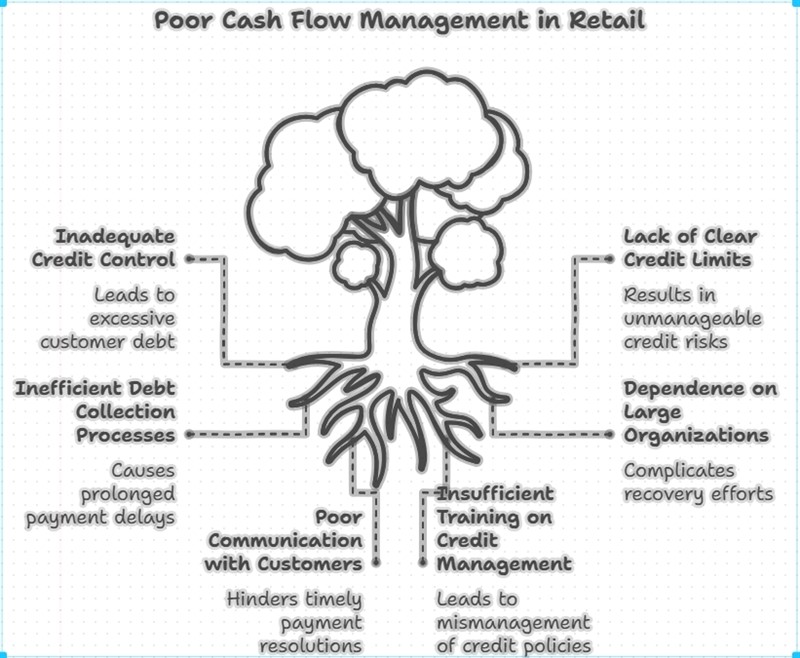
Poor credit management in retail
In Australia, most business failures stem from poor cash flow. Poor credit management is a critical survival skill for Australian retailers. While extending credit can help build valuable business relationships, it's a delicate balance that requires careful management. Many retailers find themselves challenging as some customers need credit to trade with them. These arrangements can quickly become significant debt collection problems if not adequately controlled.

For this reason, establishing clear credit limits using your Point of Sale (POS) system is critical from day one. This proactive approach prevents a typical scenario of customers accumulating more debt, which can lead to costly and time-consuming collection efforts later.

One point I want to make here is that, from personal experience, just because an organisation is large or a government authority, the problem goes away. I have been in government agencies chasing debts long overdue and complaining about nonpayment. I have had government department cheques bounce. I have had a government department take forever to pay their debts. What makes it very hard with these large organisations is that they have policies they follow, and often, despite your best efforts, they still need to change them. The other problem with large organisations is that threatening them with legal action usually does not work as it often does not worry the person personally, and all it means to them is that the problem will get transferred to another department. In these situations, keep your cool.

Understanding Credit Management

Credit management in retail isn't just about offering payment terms—it's about protecting your business while maintaining strong customer relationships. A study by the Australian Retailers Association stated that businesses using strict POS-based credit controls are 60% less likely to face serious debt collection issues.

Why Credit Limits Matter

  • Protect against excessive credit exposure
  • Create clear boundaries for customer spending
  • Automate credit decisions through your POS
  • Reduce the risk of debt creep
  • Make a plan for the total amount of money you trust Joe Blow. Use that as a benchmark.
  • A credit limit should only be increased if required and if the customer consistently pays. They must earn a higher credit limit.


Credit Policy Development

-Set up a well-structured credit policy in your POS system that should include:
-Clear payment terms (30, 60, or 90 days)
-Specific credit limits are based on customer history and needs.
-Make a formal approval process for limit increases
-Set a warning threshold for your business, typically at 70% of the credit you are willing to give.
-Preventing Over-Reliance on Credit
-Consider alternatives; today, with widespread credit and BNPL cards, consider whether the customer needs credit. 

Early Warning Systems 

-Customers are approaching credit limits.
-Overdue payment patterns
-Unusual purchasing behaviour
-Payment promise breaches

POS System Setup & Features

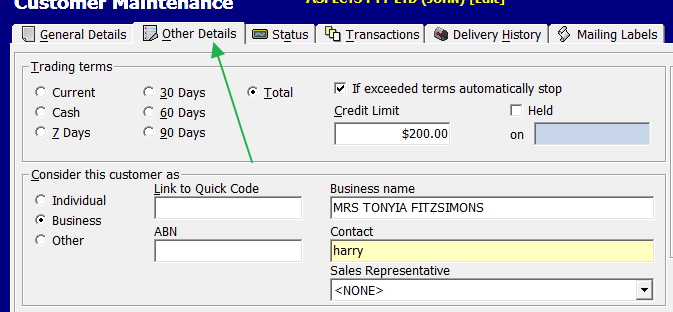
In your system, click on the main menu to customer > customer maintenance.

Now call up a customer, and click Other Details. (see green arrow below)


There are two options that I would like to run through with you. 

You can select a credit limit for a period, a big problem with majors is that they have the money, but they take a long time to pay, so in this case, you may want to give them a large credit limit but watch if they go over time.

The next option is to decide whether the account should be stopped if it exceeds the credit limit or the operator should be warned so you can be notified. Collecting the debt while they are in front of you and want the goods is the cheapest and best place.

Trust me. It’ll all be worth it to do this.

Allow people to get more credit limits over time, start them small and let the amount build up.

I also recommend that every year, you review your credit limits.


Conclusion

Managing credit limits effectively through your POS system is crucial for retail success in today's competitive Australian market. While it might seem easier to be flexible with credit limits, the short-term convenience isn't worth the potential long-term headaches. Our POS system removes emotion from credit decisions and consistently enforces your policies, helping build a more robust, more profitable retail business with healthy cash flow and minimal credit issues.


Add new comment

Restricted HTML

  • Allowed HTML tags: <a href hreflang> <em> <strong> <cite> <blockquote cite> <code> <ul type> <ol start type> <li> <dl> <dt> <dd> <h2 id> <h3 id> <h4 id> <h5 id> <h6 id>
  • Lines and paragraphs break automatically.
  • Web page addresses and email addresses turn into links automatically.
CAPTCHA This question is for testing whether or not you are a human visitor and to prevent automated spam submissions. Image CAPTCHA
Enter the characters shown in the image.