
Point of Sale Software

Here are some Articles from the Blog Subject - Least Cost Routing -

This article is worth a read on EFTPOS/Credit fees now
POS SOFTWARE

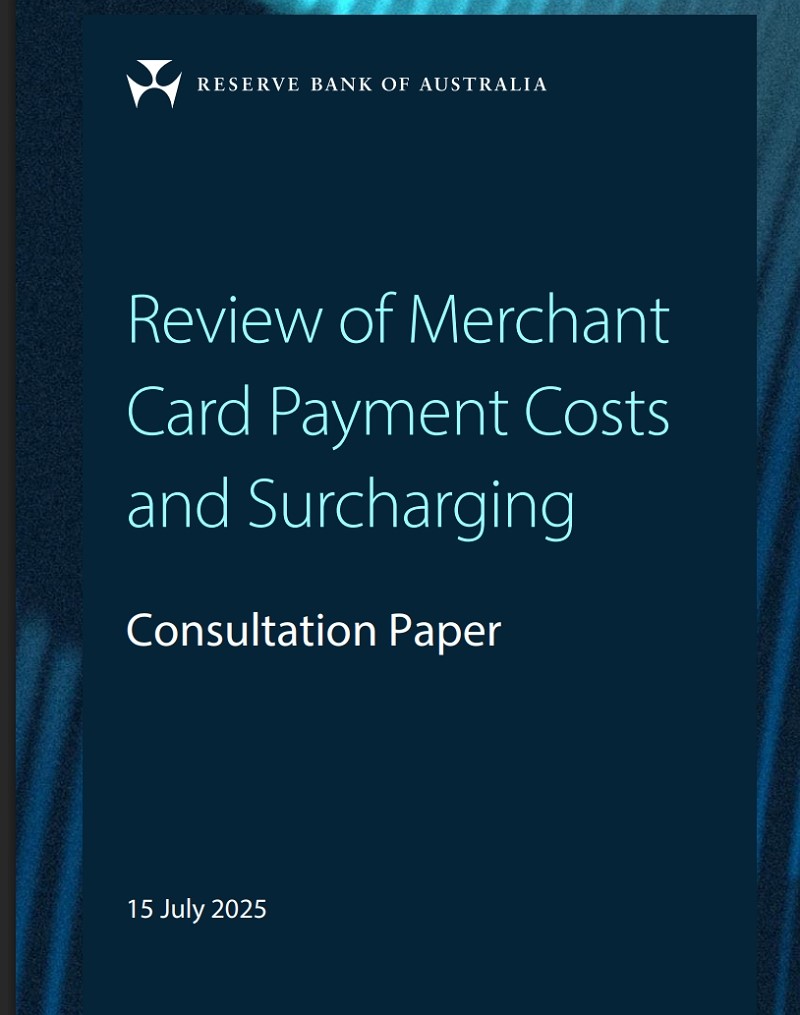
Stephen Ferguson's recent article is worth your time because it explains publicly, in plain language, why Australia's digital payments system is fundamentally unfair. With the Reserve Bank of Australia (RBA) now nearing a final decision on merchant card payment costs and surcharging, the timing of this conversation couldn’t be more important.

As someone who supplies and consults for small businesses, I spend a lot of time listening to owners talk about rising costs, shrinking margins, and "death by a thousand fees." I’ve helped my clients save significant amounts on their EFTPOS and credit card fees simply by auditing their systems. Our thoughts on the RBA matter are in our submission here.

What I liked about Ferguson's article is that it puts a spotlight on a problem many retailers can’t easily see from behind the counter: the hidden mechanics of these fees. However, from a supplier's perspective, there are a few points I need to add to the debate.

The Great Rewards Rip-Off

The most glaring issue in our payment system is the deep unfairness of who actually pays for consumer rewards. It is completely unjust that every day, merchants are forced to foot the bill for the luxury benefits enjoyed by premium credit card users.

When a customer taps a high-tier credit card, they earn frequent flyer points, airline lounge passes, and free international travel insurance. But the credit card company does not pay for those perks. You do.

In reality, processing a rewards credit card can be three to five times more expensive than a basic debit transaction. If you are on a "blended" merchant rate, you are actively subsidising these premium costs every time a customer pays with their own money via debit.

I doubt consumers will save much

As the RBA decision looms, you will see big headlines about a surcharge ban "saving consumers," with figures like $1.2 billion a year being thrown around.

Personally, I am highly sceptical that most shoppers will actually feel that in their weekly budget. As I stated in our recent industry submission, these massive processing costs will not just vanish. If merchants are forced to absorb them, those costs will inevitably be passed on to higher shelf prices and greater bank fees elsewhere in the system.

What I’d add to the article

While Ferguson champions Least Cost Routing (LCR), we need to acknowledge that Dynamic LCR is not consistent across banking providers, and that is a massive problem.

The banks use entirely different types of LCR—such as "binary" or "threshold" routing—and these older methods do not deliver the same financial outcome for small businesses as true, real-time Dynamic LCR. Just because one bank states it has "LCR enabled" does not mean it operates the same way as another bank's system. This lack of standardisation desperately needs to be addressed.

Furthermore, we cannot ignore the rapid rise of premium debit cards, like Platinum Visa or Mastercard debit options. These cards offer consumer rewards, but they still only cost merchants around 0.5% to 1% to process. Why should they be lumped into the same high-fee bucket as premium credit cards?

Take Action and Protect Your Margins

I would not suggest waiting around, hoping the RBA or the big banks will voluntarily fix a system that is currently so profitable for them. You need to protect your own margins right now.

I strongly recommend you contact your EFTPOS or credit card provider this week and ask them these three specific questions:

  • Am I currently on a blended rate?
  • Do you provide true, real-time Dynamic LCR, and is my terminal actively using it?
  • Can you provide a monthly report showing the percentage of my eligible debit transactions routed via the lowest-cost network?

Have a read of Ferguson's article when you get a chance, and let me know what you think in the comments below. Have you checked your LCR status recently?

Written by:

Bernard Zimmermann


Bernard Zimmermann is the founding director of POS Solutions, a leading point-of-sale system company with 45 years of industry experience, now retired and seeking new opportunities. He consults with various organisations, from small businesses to large retailers and government institutions. Bernard is passionate about helping companies optimise their operations through innovative POS technology and enabling seamless customer experiences through effective software solutions.



Add new comment

Restricted HTML

  • Allowed HTML tags: <a href hreflang> <em> <strong> <cite> <blockquote cite> <code> <ul type> <ol start type> <li> <dl> <dt> <dd> <h2 id> <h3 id> <h4 id> <h5 id> <h6 id>
  • Lines and paragraphs break automatically.
  • Web page addresses and email addresses turn into links automatically.
CAPTCHA This question is for testing whether or not you are a human visitor and to prevent automated spam submissions. Image CAPTCHA
Enter the characters shown in the image.

Why EFTPOS fees are costing you more

POS SOFTWARE

Why EFTPOS fees are costing you more then they should

Yesterday, I met with a bank representative about securing better EFTPOS rates for our clients. The subject of least cost routing (LCR) came up after I pointed out that our analysis of EFTPOS fees showed a big difference in fees between banks even though they had similar rates. I discovered that many merchants lost thousands of dollars a year last year in fees because of ignorance.

To understand why these unnecessary costs occur and how to avoid them, we must first understand the mechanics behind payment processing and the critical role of least-cost routing.

Least Cost Routing (LCR)

Least Cost Routing (LCR) is a payment processing feature that can significantly reduce your fees when processing debit/credit card payments.

When a customer taps their card, the payment can go in as an EFTPOS or credit card.

Now, some banks will often do a deal that both go through as 1%. Generally, this costs you more. So it's no wonder they offer it.

What is smarter is to have EFTPOS charged as a flat fee per transaction, say, $0.15-$0.30. Let us work here with 20 cents for this blog post. Visa/Mastercard generally go in as percentage-based fees, e.g., 0.8%-2% of the transaction value, say 1.2%

The exact charges will vary but generally depend on your average transaction value and the amount you send through the system.

Payment processing costs

Let's say I come into your shop, buy a $10 item, and tap. Your cost if it is EPTPOS is 20 cents. Your cost if it's Visa/Mastercard is 12 cents. It is better for you that it goes through as a Visa/Mastercard.

Now, if I brought a $50 item, your cost if it is EPTPOS is 20 cents. Your cost if it's Visa/Mastercard is 60 cents. It is better for you that it goes through as an EFTPOS here.

The EFTPOS flat fee model is usually cheaper for transactions, typically above $30-$40.

Without Least Cost Routing enabled, your payment terminal automatically processes contactless "tap-and-go" payments through Visa or Mastercard networks. If you have it enabled, you can direct them to the cheapest system.

Now, here's the kicker: There are two different types of Least-Cost routing, LCR and MCR, and although banks tend to call them the same, they are not.

LCR vs. MCR: The Critical Distinction

Let's start by untangling the often misunderstood terms.

With LCR enabled

  • Each transaction in real-time is analysed
  • Fees are automatically calculated for each route.
  • The payment is routed through the network that will cost you the least

The key advantage? There's no manual intervention required.

Merchant Choice Routing (MCR)

With MCR, you, as the merchant, have the choice of which payment network to route a transaction. You must understand the costs and select the route manually each time.

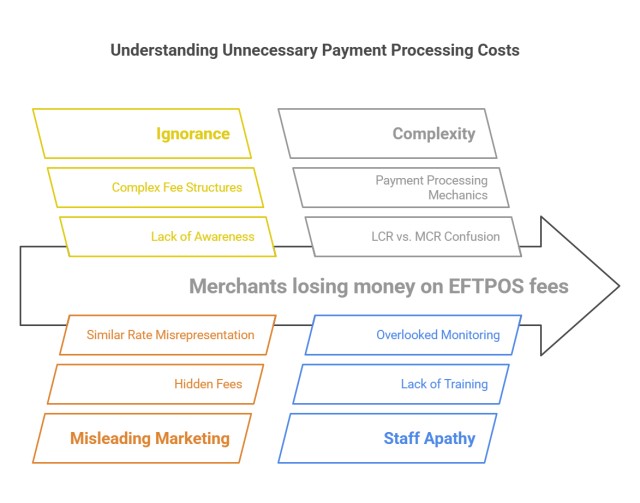
Reasons for the Financial Impact

Ignorance

Many merchants remain utterly unaware that LCR/MCR exists. Banks do not automatically set them up; you need to ask.

Misleading Marketing

Some payment providers market the MCR solutions as LCR, leading merchants to believe they automatically get the best rates when they do not.

The Complexity Conundrum

It's another thing to remember in retail when doing a transaction.

Set It and Forget It Fallacy

Merchants often assume that everything is fine once MCR is enabled. They don't realise that they must monitor and train their staff.

The Staff Apathy Factor

This is huge. Even if the owner understands the importance of the payment, if the staff member processing the payment doesn't understand or care about the difference, they will route the transaction through the most convenient (often most expensive) network.

The Hidden Cost of Inaction

The cumulative impact of improper routing is staggering:

  • A cafe processing 200 daily transactions could lose $15-20 per day, or over $5,000 annually.
  • A retail store with an average transaction of $80 could save up to 1% on each sale through proper routing—potentially thousands of dollars per year.
  • For a business with tight margins, these "invisible" costs can be the difference between profitability and loss.

Taking Control: How to Really Optimize Your Payment Processing

Become an Informed Consumer

If you have the least-cost routing, activate it and then find out how it works. If possible, demand LCR.

Work out the best system for a transaction to go through as debt or credit card.

Prioritise Staff Training

Provide your staff with clear, concise training on how to use the EFTPOS system correctly.

Monitor

Go through your statements that your instructions are happening.

Save on transaction fees

You can make substantial savings with a little effort and work.

Add new comment

Restricted HTML

  • Allowed HTML tags: <a href hreflang> <em> <strong> <cite> <blockquote cite> <code> <ul type> <ol start type> <li> <dl> <dt> <dd> <h2 id> <h3 id> <h4 id> <h5 id> <h6 id>
  • Lines and paragraphs break automatically.
  • Web page addresses and email addresses turn into links automatically.
CAPTCHA This question is for testing whether or not you are a human visitor and to prevent automated spam submissions. Image CAPTCHA
Enter the characters shown in the image.